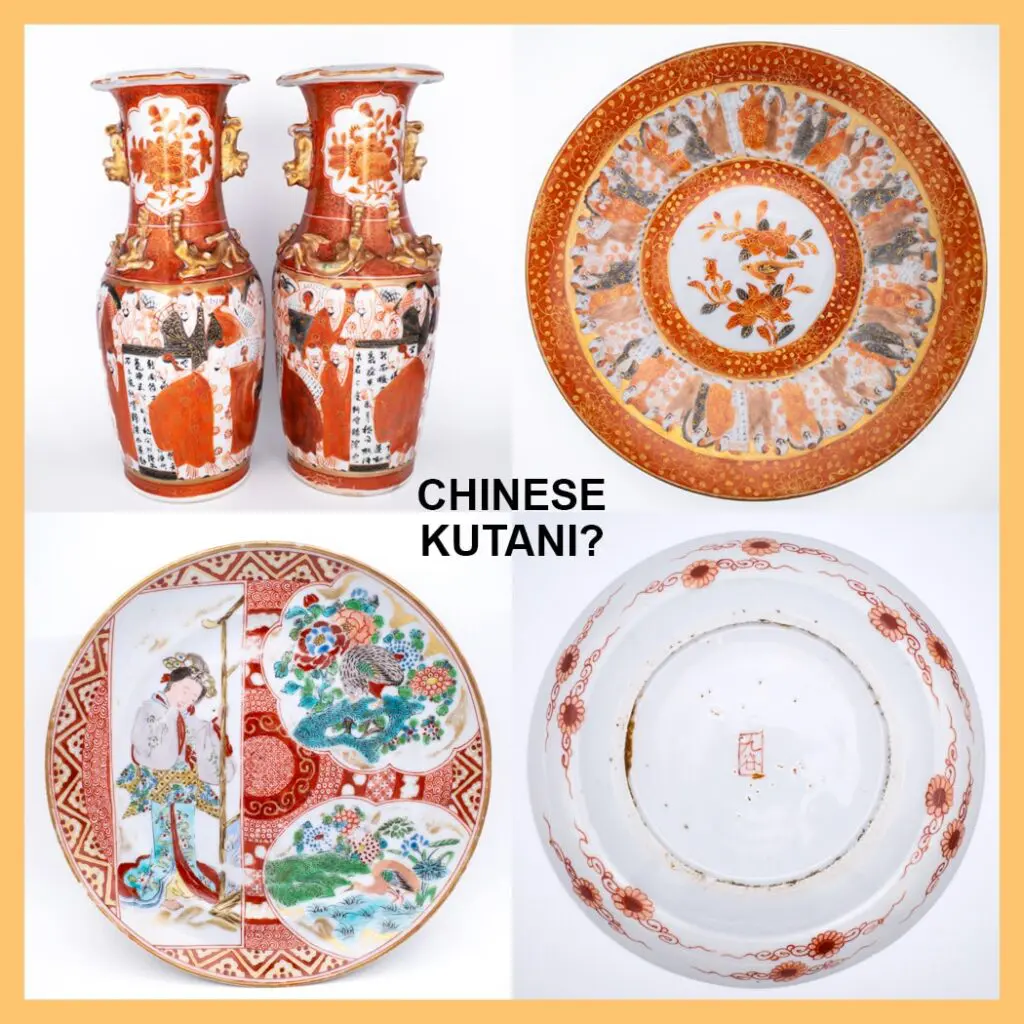
Did you know that Chinese made copies of Japanese Kutani porcelain in the late 19th century? Me neither. After acquiring a unique Chinese dish decorated in typical Kutani style – complete with mock Kutani mark! – I was curious to learn more. However, sifting through literature and searching online didn’t help – there appears to be no mention of these anywhere. One of the curators at V&A told us that they remember Rupert Faulkner, their retired Senior Curator of Japanese Art, mentioning Chinese copies of 19th century Japanese export ceramics in a conversation some years ago. This anecdotal evidence was all I had at this point.
I kept searching and was later able to find additional examples of Canton porcelain decorated in the Kutani style and similar pieces in other collections which are mentioned below. But the question remains – why did they do it? Anthony M. Lee suggested in our original post that this might have been a response of Chinese decorators to increased popularity of Japanese motifs during the craze of Japonisme in Europe in the second half of the 19th century. I personally like that theory and it makes a lot of sense.
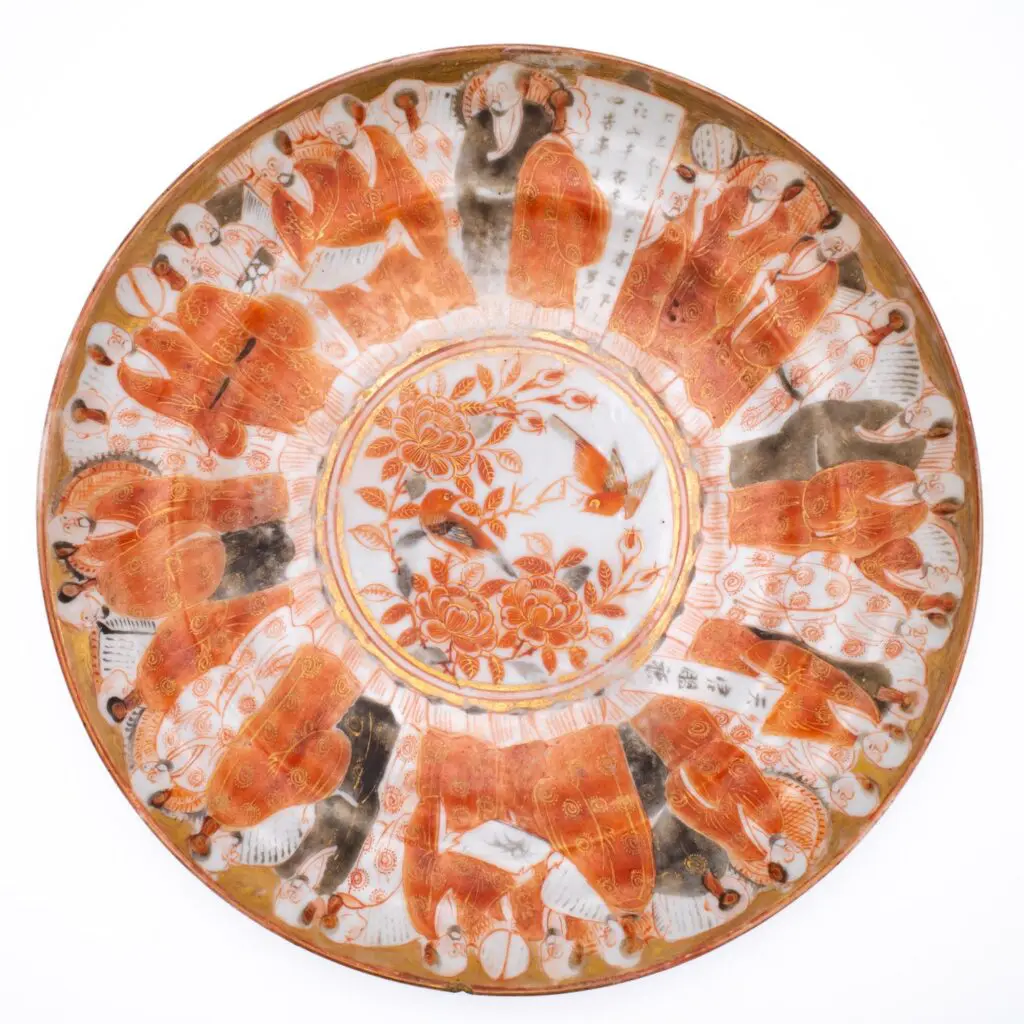
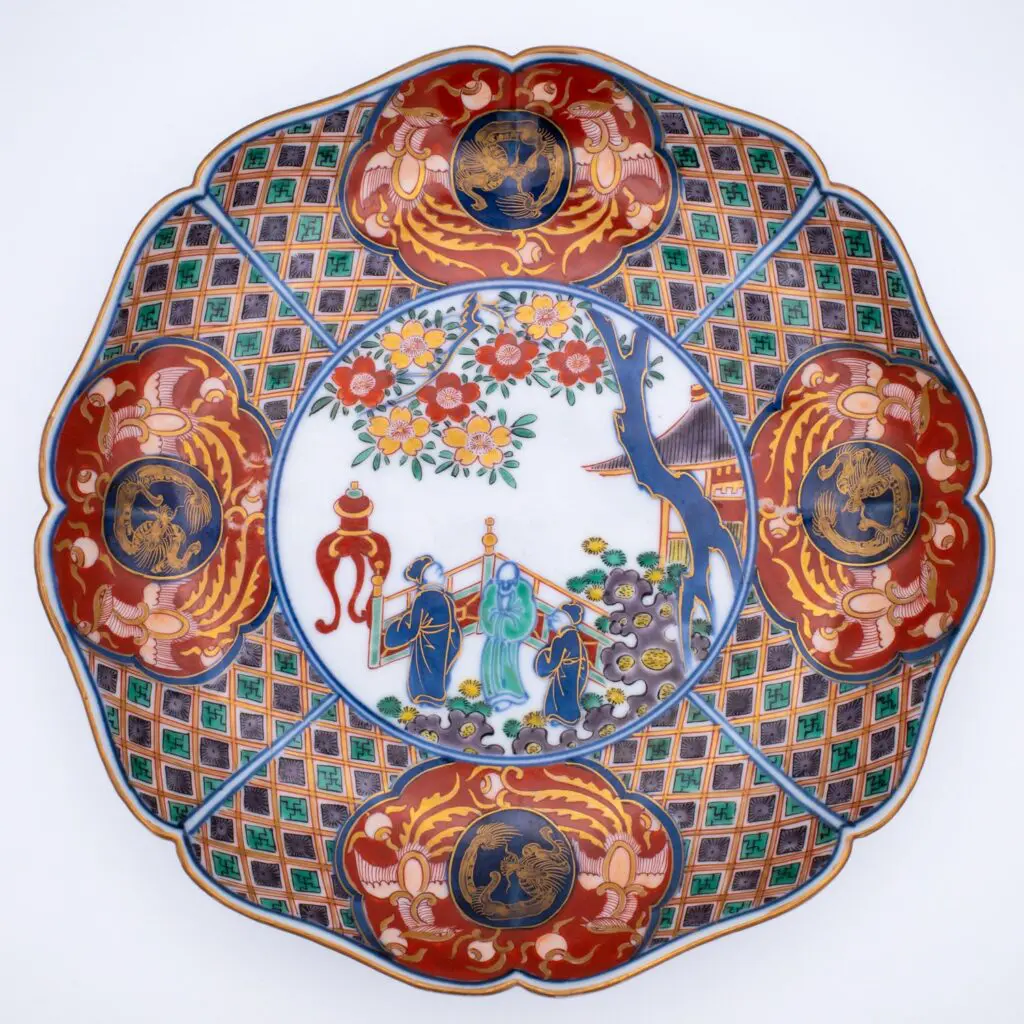
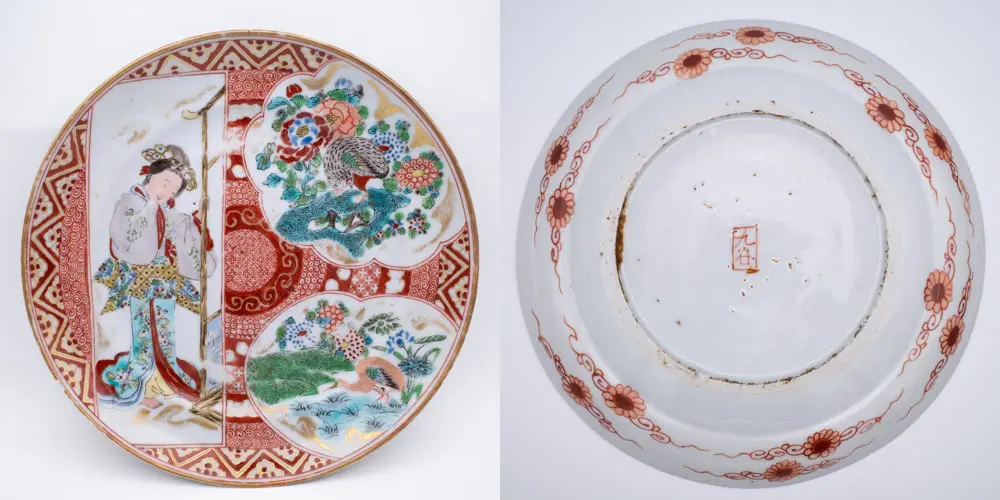
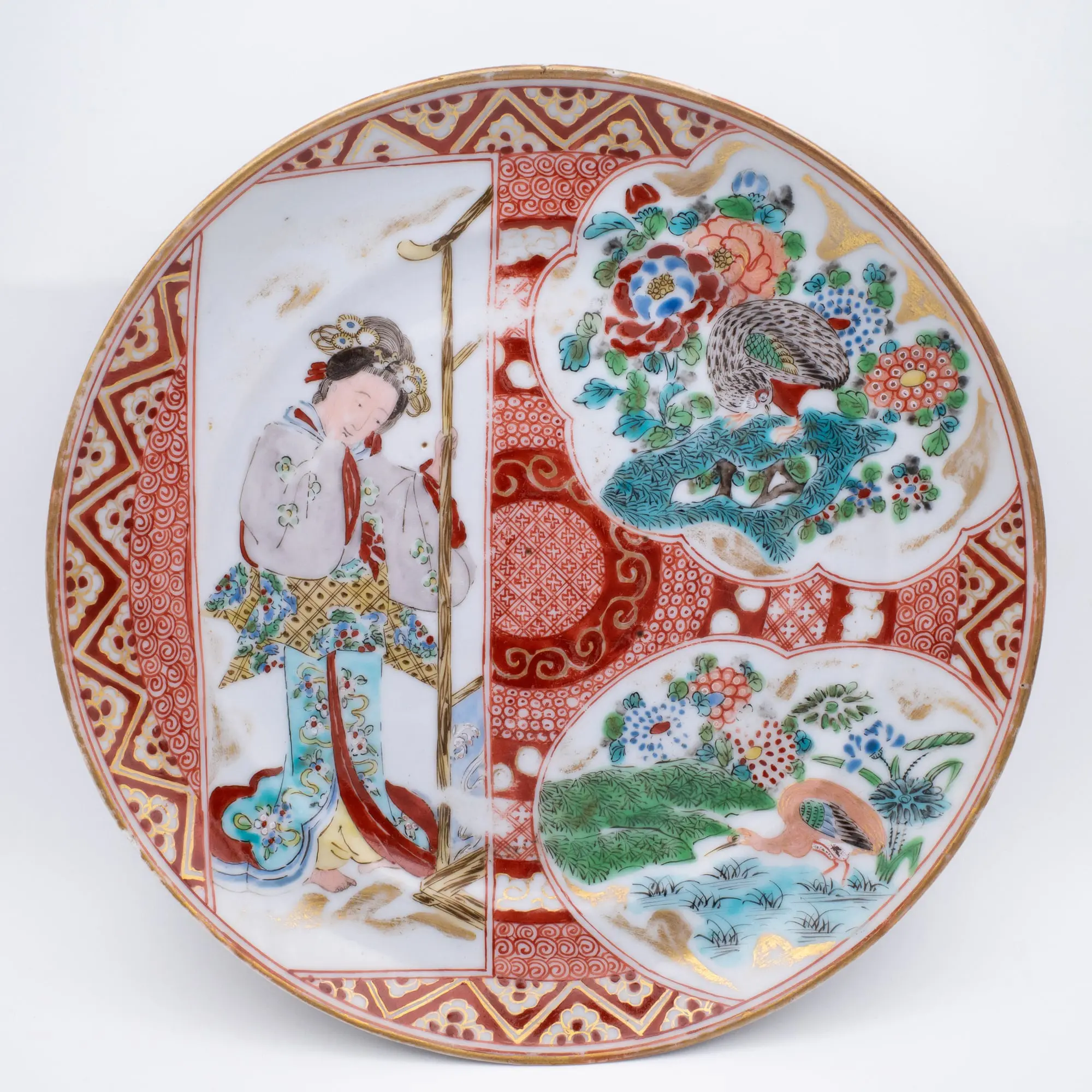
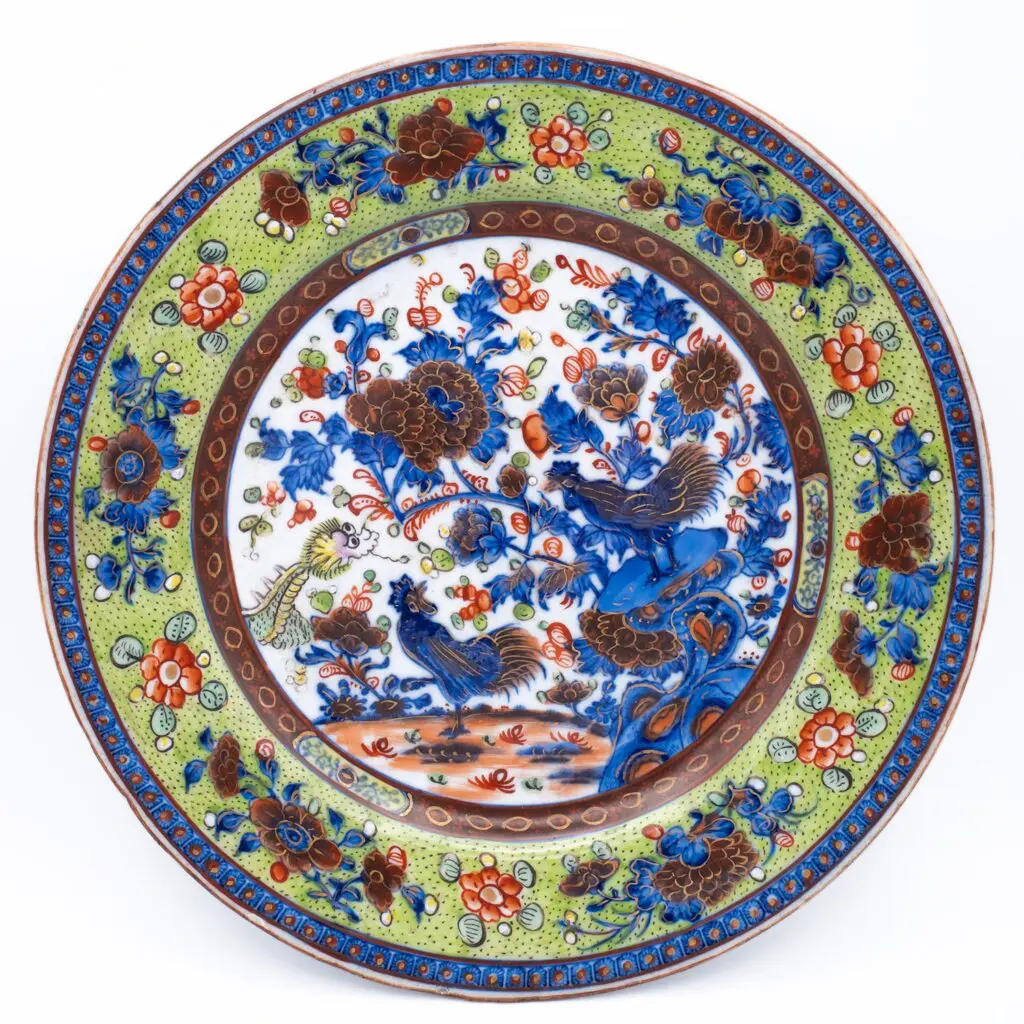
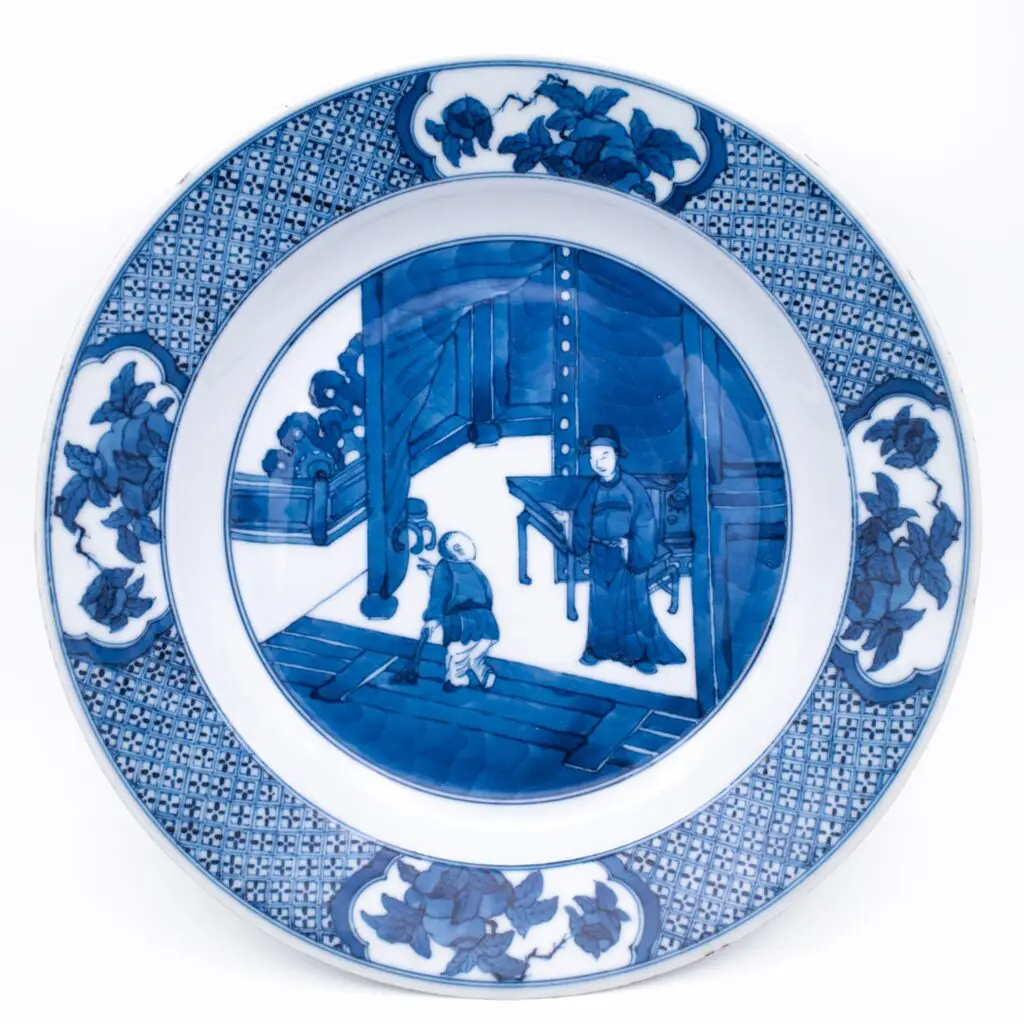
This is the dish that started our interest in this topic. At first glance just a normal Japanese Kutani plate but you flip it over and realize that this is a 19th century piece of Chinese porcelain typical of Canton export pieces. It is 20 cm in diameter.
Detail of the foot.
You then have another look at the decoration and realize how different it is from actual Japanese examples when you start examining it closer. All the little details including figure’s face, flowers and diaper background are not consistent with Japanese style. It does appear that this is an attempt to copy Kutani porcelain by someone who was not used to paint this type of decoration. Our first thought was that it might be a porcelain blank that was later decorated in Europe but looking at other examples shown below makes us believe that this was decorated in Canton, China.
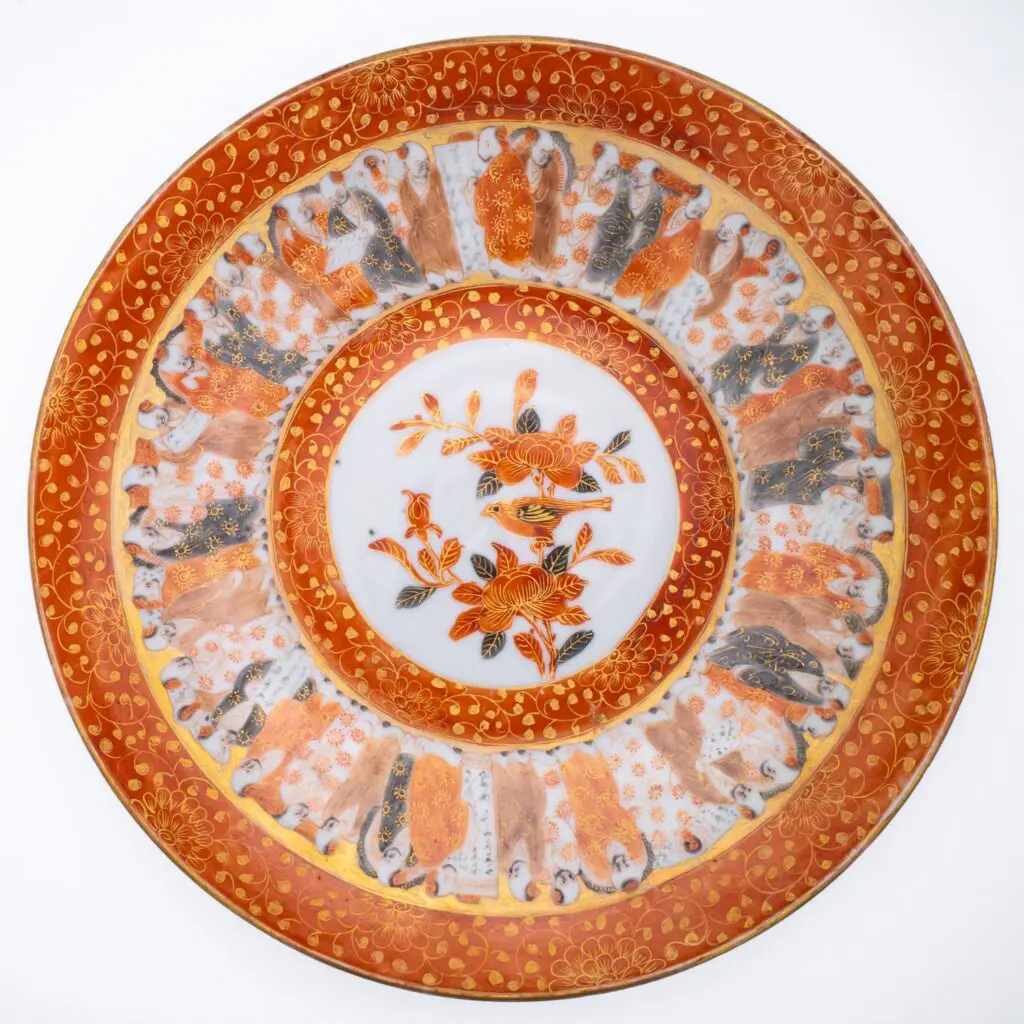
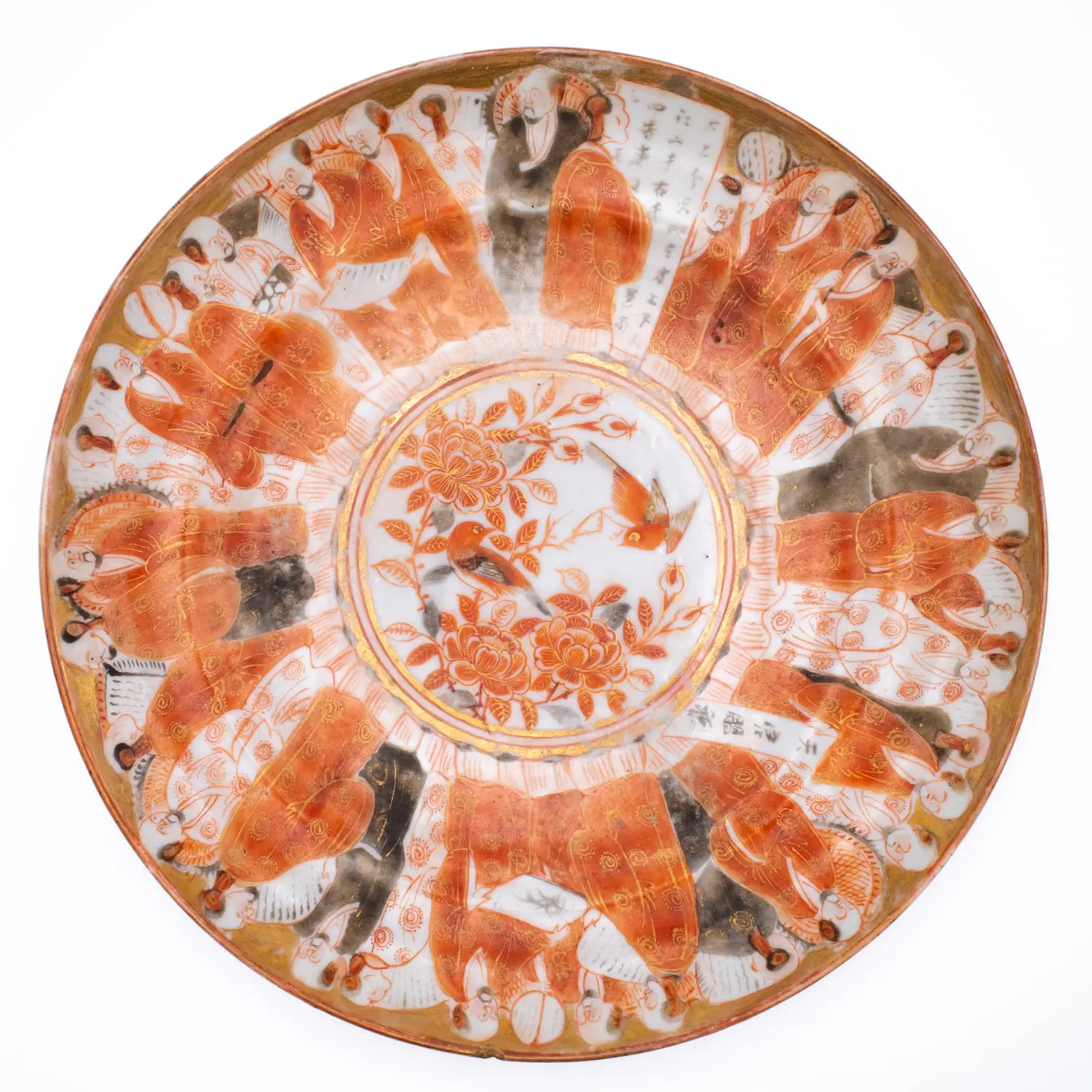
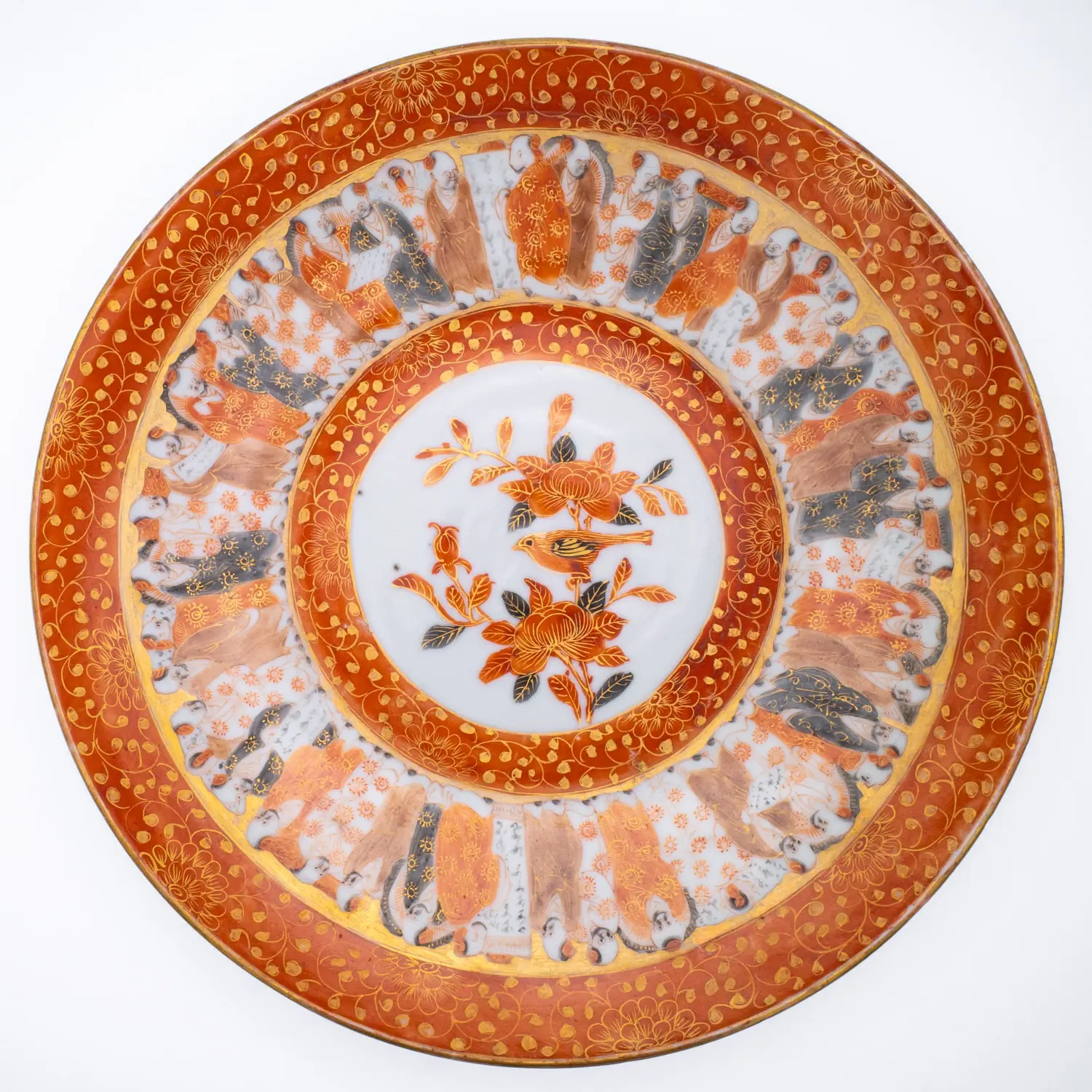
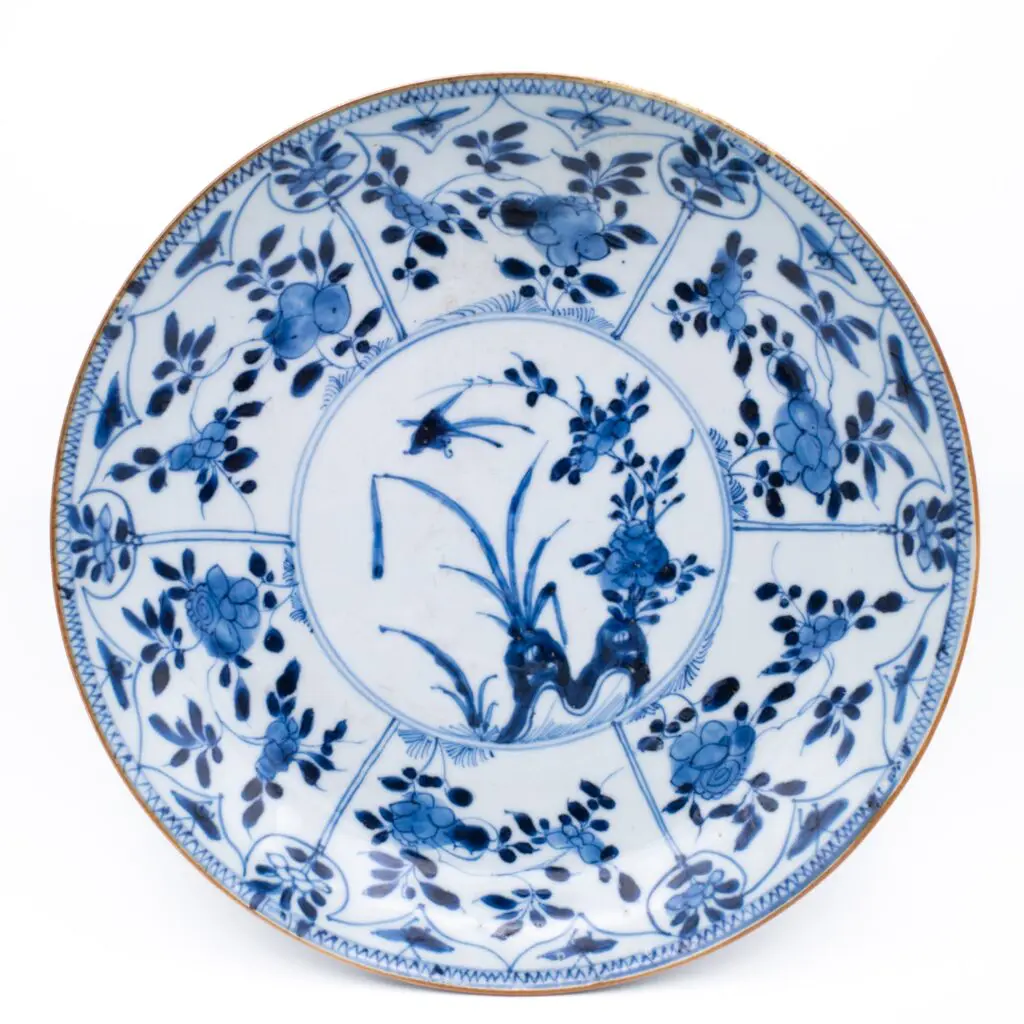
This was our second find – a Chinese dish of almost identical form and size, but this time decorated in aka-e Kutani pattern commonly referred to as ‘thousand scholars’. Notice the central medallion with a very typical Chinese bird-and-flower motif. Once again, when you start looking at the details, you will see stylistic differences in the way figures are painted (more on this below). This example doesn’t have any mark on the back so you could argue that rather than being a copy of Japanese Kutani porcelain, it is just a Chinese interpretation of the same pattern.
Two dishes side by side.
Porcelain bodies are of similar size and form with some difference in the colour of the paste.
Even though this second dish isn’t marked, we’ve managed to find another – almost identical – example online with this unusual iron red mark that reads 阜隆 (Fulong).
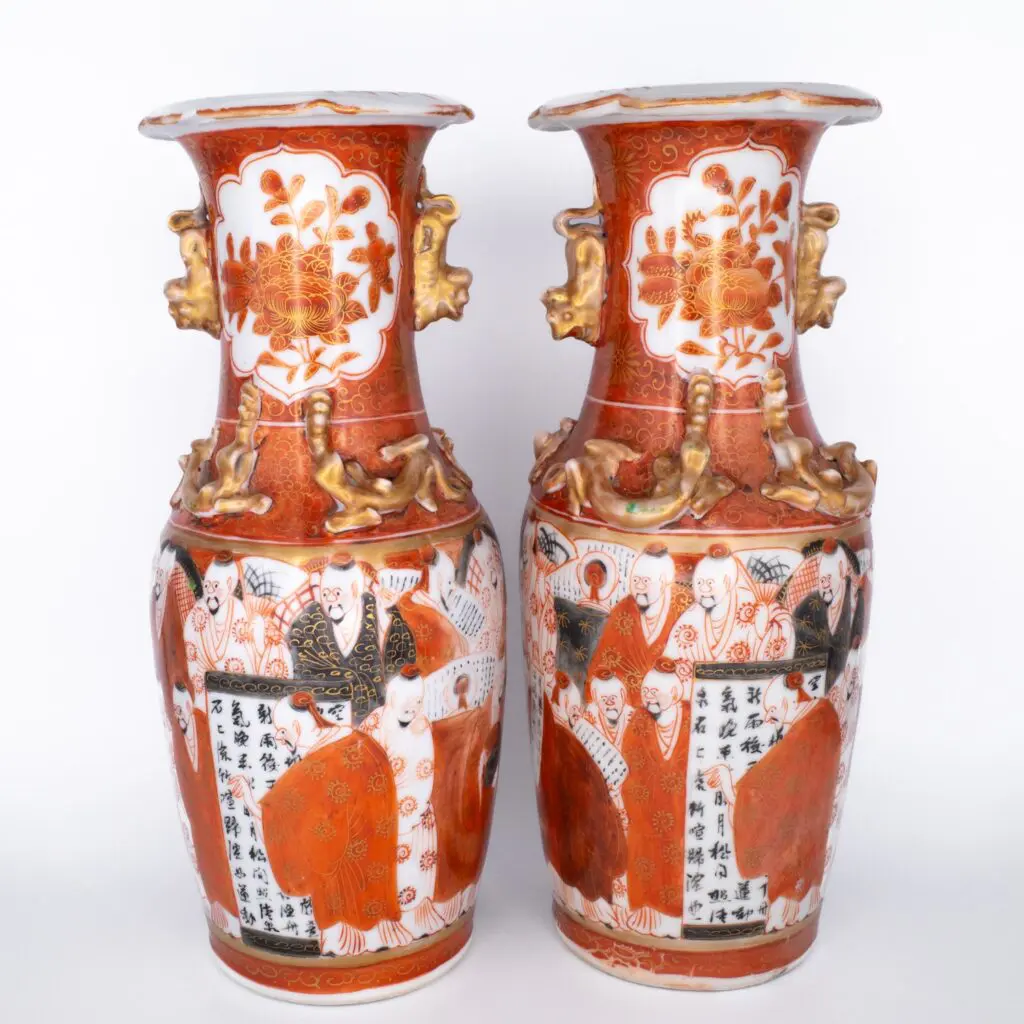
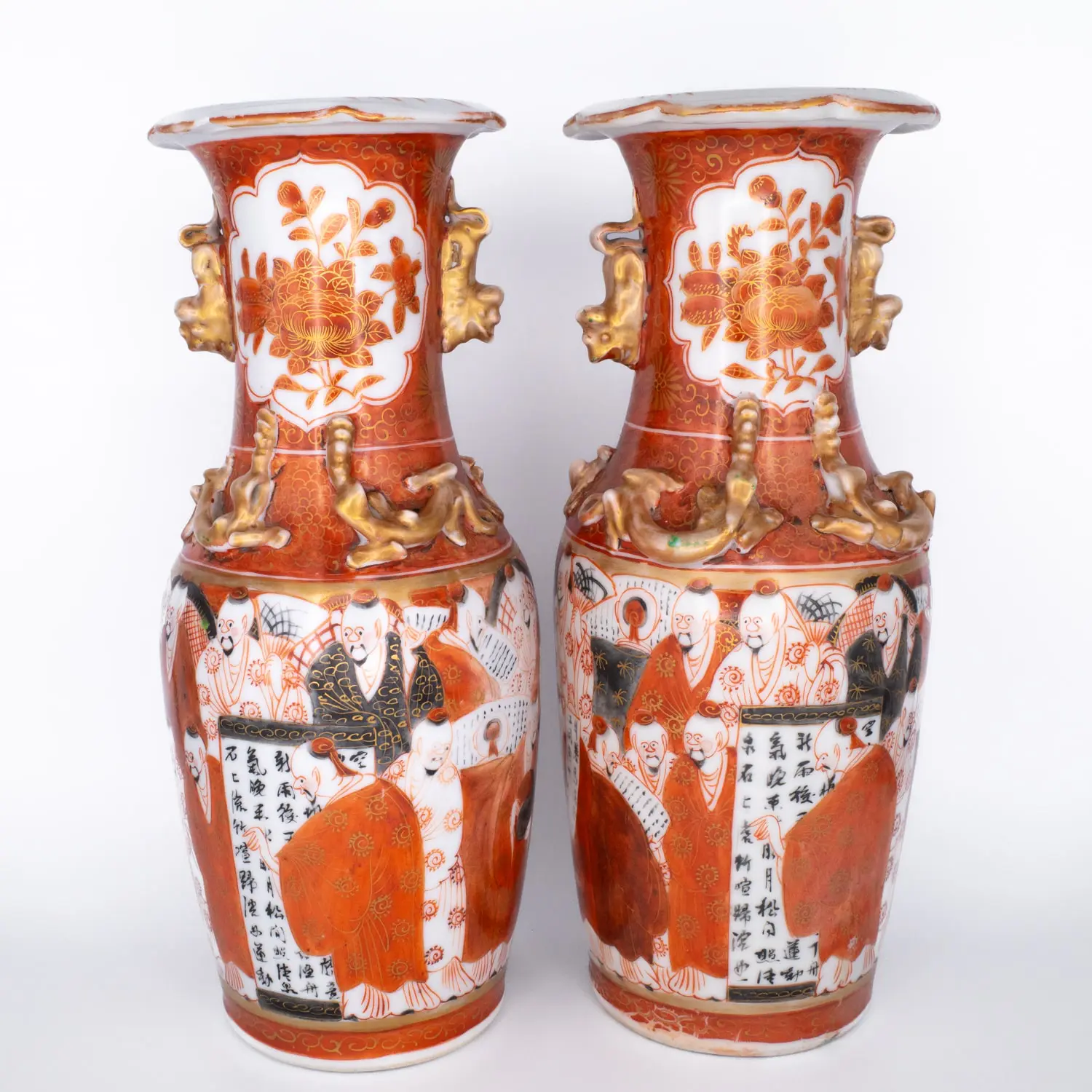
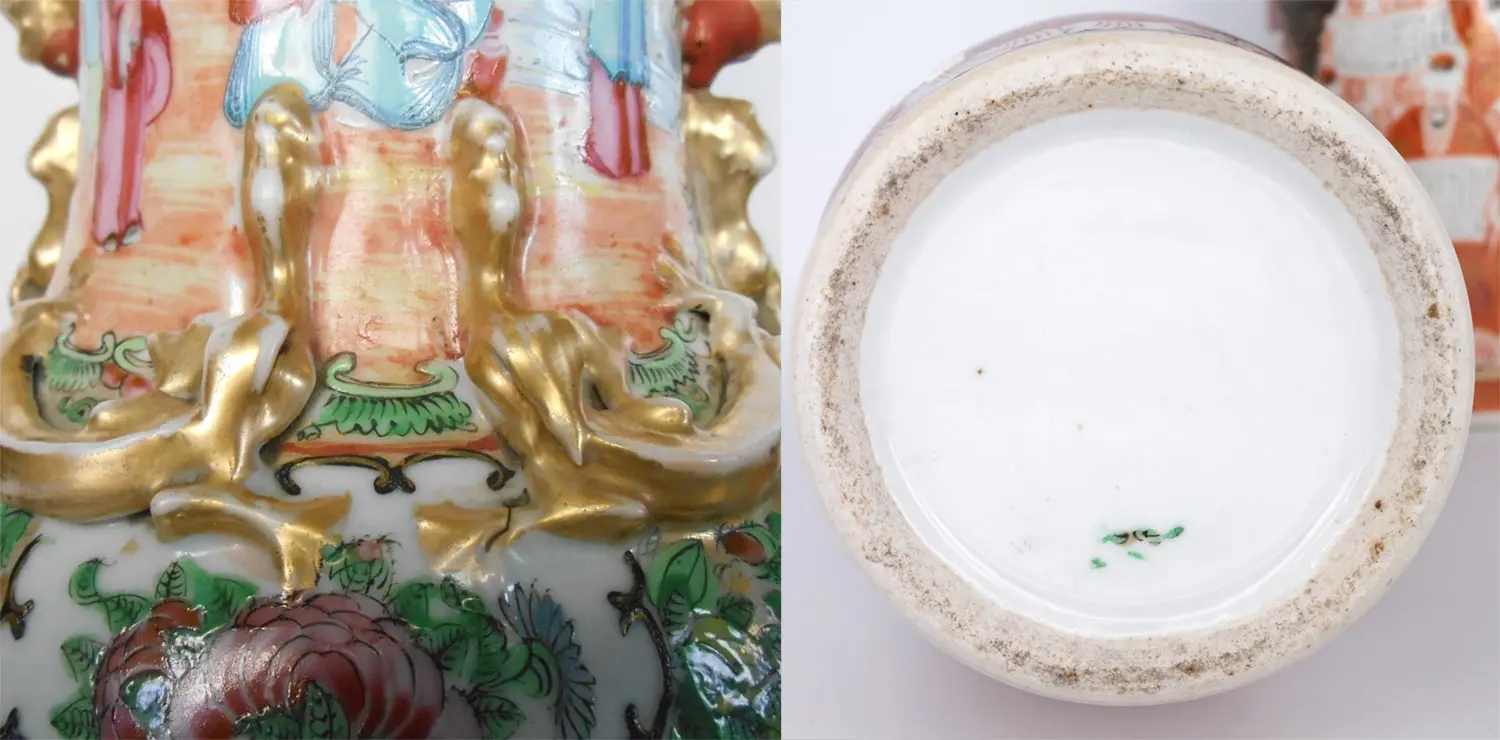
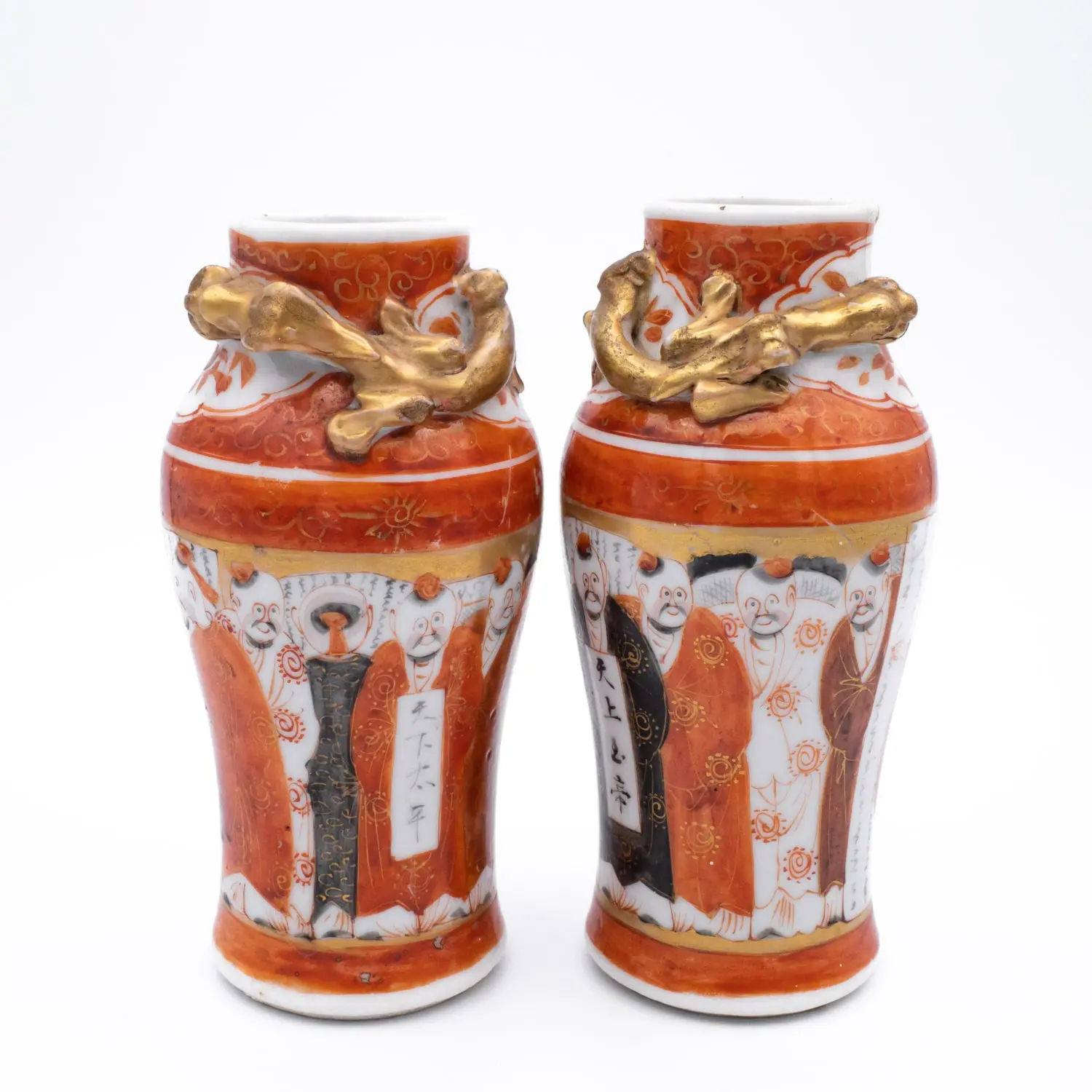
Green enamel residue at the base of one of the vases (right) is very typical of enamels found on 19th century Canton Famille Rose porcelain decorated in Rose Mandarin or Rose Medallion style (left). This would suggest that these ‘rouge de fer’ examples were made by the same studios that produced more typical export pieces.
Miniature examples with applied gilt chimeras. These would originally come with domed lids featuring gilt foo lion finials. Each measures approx. 12.5 cm / 5 inches tall.
Comparison of figures on Chinese and Japanese porcelain. Eyes on Chinese examples are dots, compared to dashes on Japanese ones. Outlines are done in iron red on Chinese examples and in black on Japanese. There is also difference in hairstyles between the two.
And one more dish in the same pattern – this one measures 23.8 cm in diameter, is more thickly potted and has a different type of foot. It again features a bird-and-flower medallion in the middle and two concentric iron red and gilt borders with ‘hundred sholars’ motif between them.
Detail of the foot with traces of kiln grit (click to enlarge).
So, what are your thoughts on this topic? Do you have similar pieces in your collection? Are you aware of any literature mentioning these? We would love to hear from you and learn more! Feel free to contact us at info@orientalantiques.co.uk
See what’s been happening on our website and on eBay this January. Our audience is rapidly growing so we would like to welcome all our new visitors and members. Hope you’ll find our resources and articles helpful. We would also like to thank all customers using the new Asian art identification service which is quickly becoming one of our most popular pages. We’ve had great feedback so far and are very excited to keep solving mysteries of antique Asian objects for you.
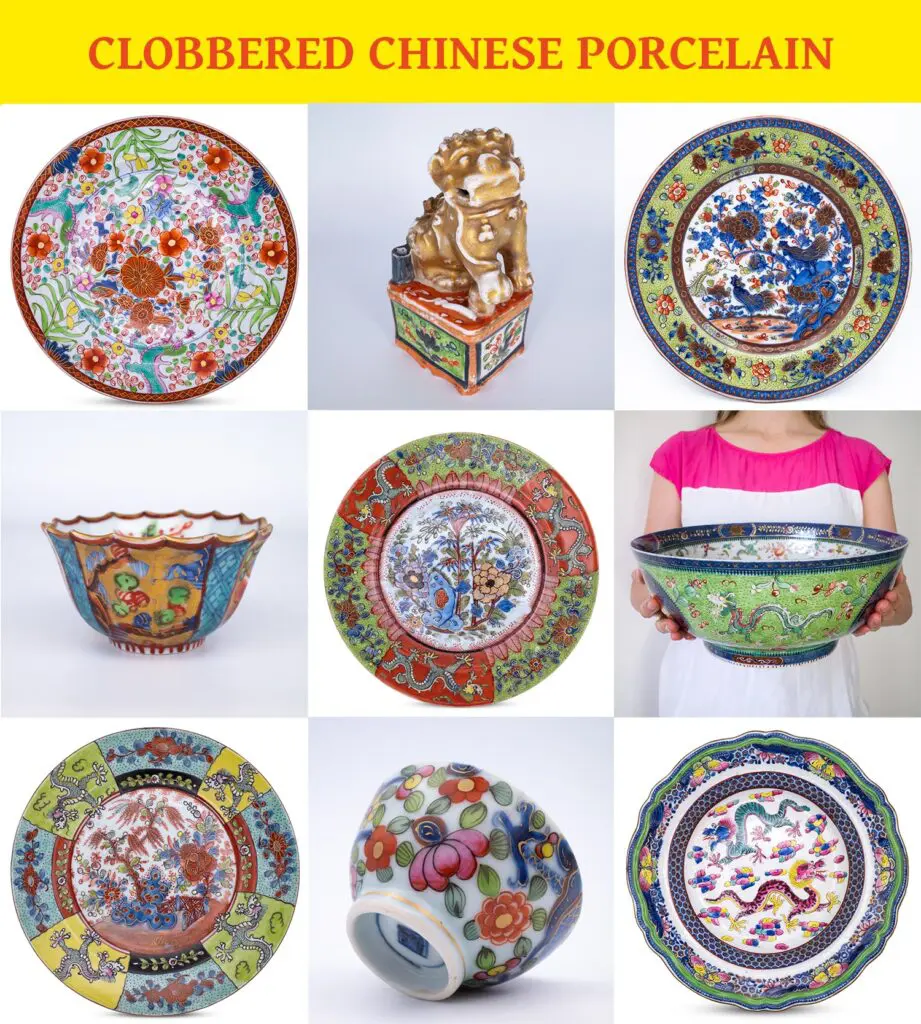
We’ve also added a new article on ‘clobbered’ Chinese porcelain and will keep expanding it as we come across additional examples of these completely unique and very colourful pieces of Chinese porcelain decorated in Europe. See the list below for all new additions to our website and eBay shop this January.
Visit Asian Art Curator to bid on latest eBay auctions closing this week. Featured auctions are being added throughout the week so make sure to stay up to date! Our Resource Hub features all our free Asian art resources.
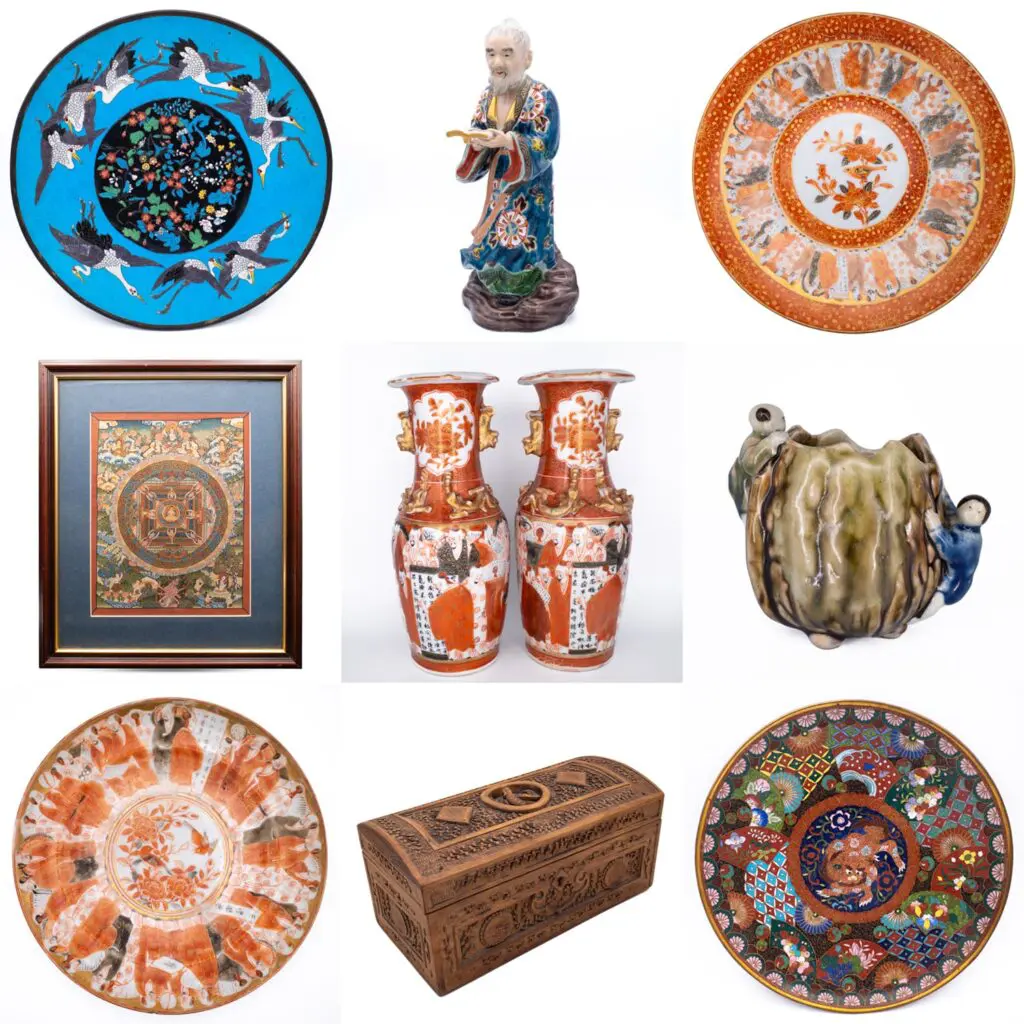
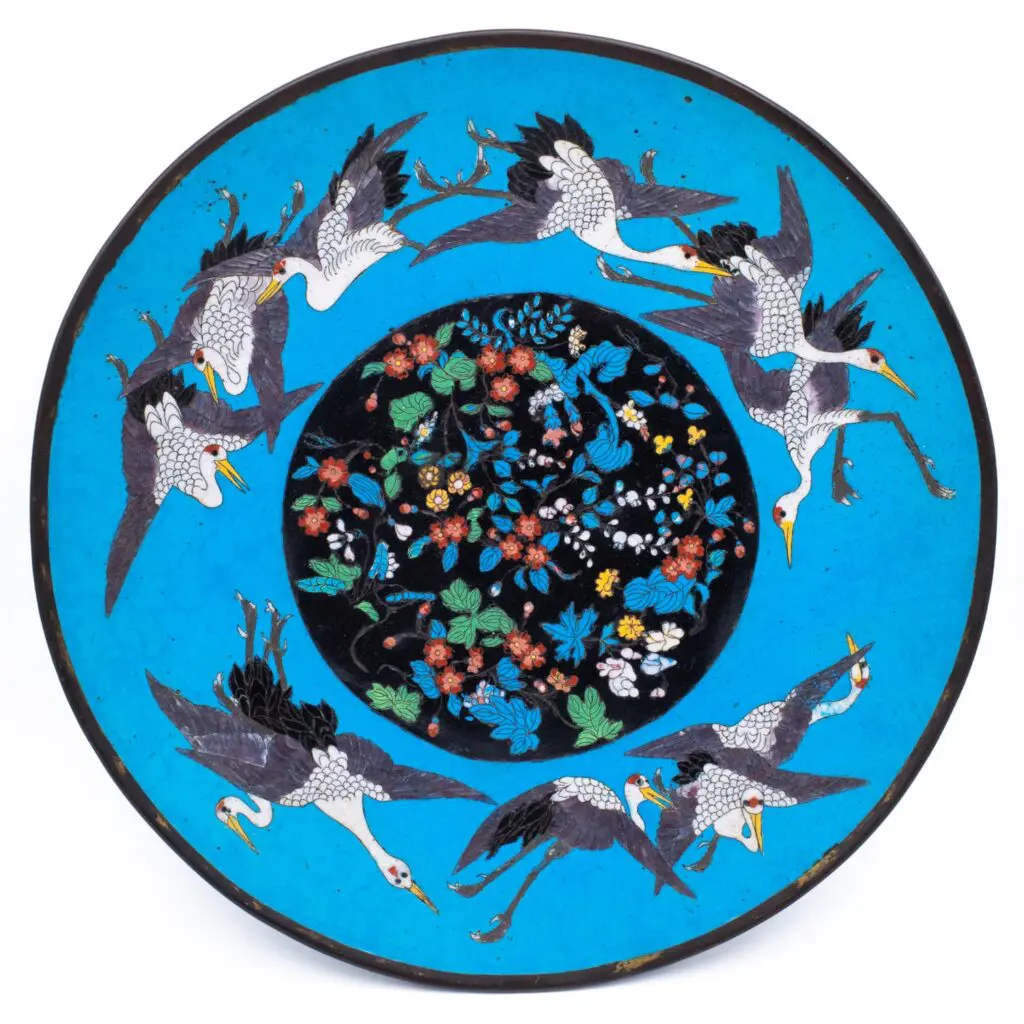
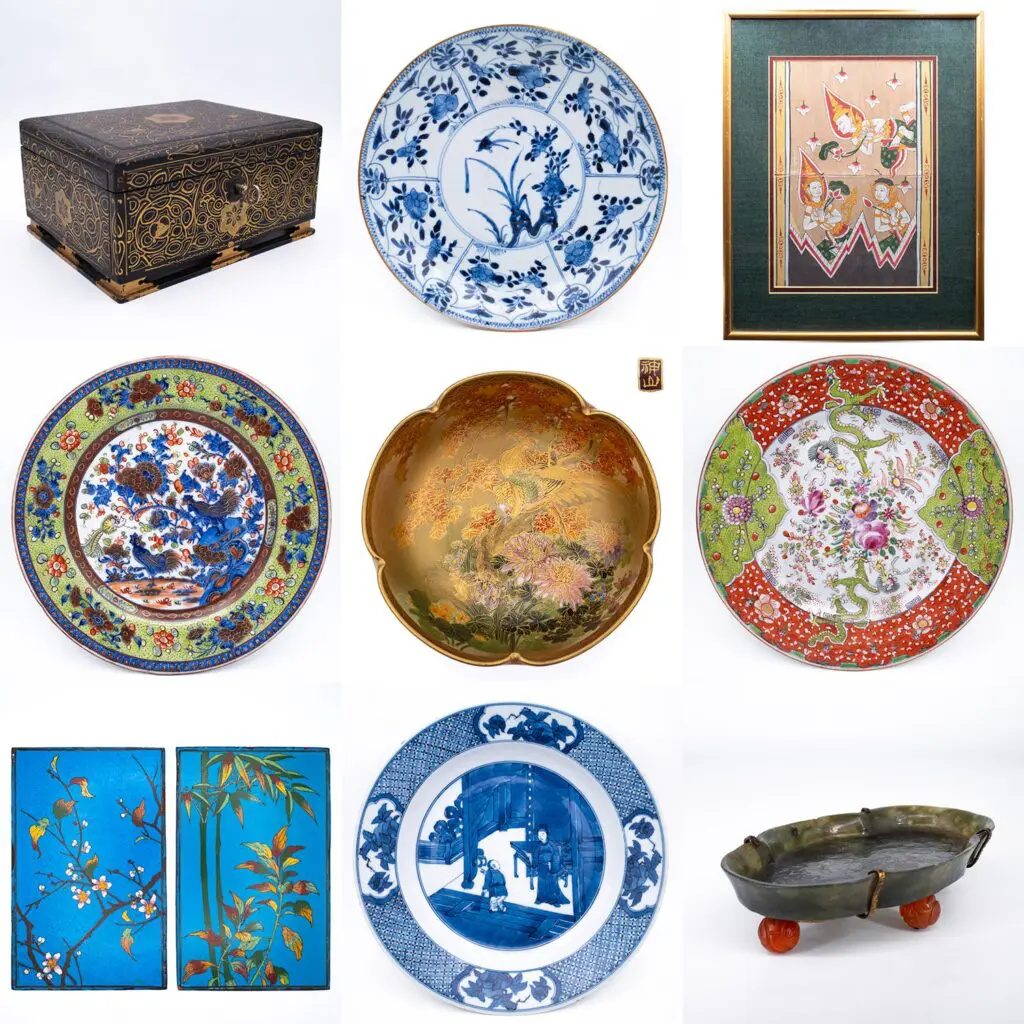
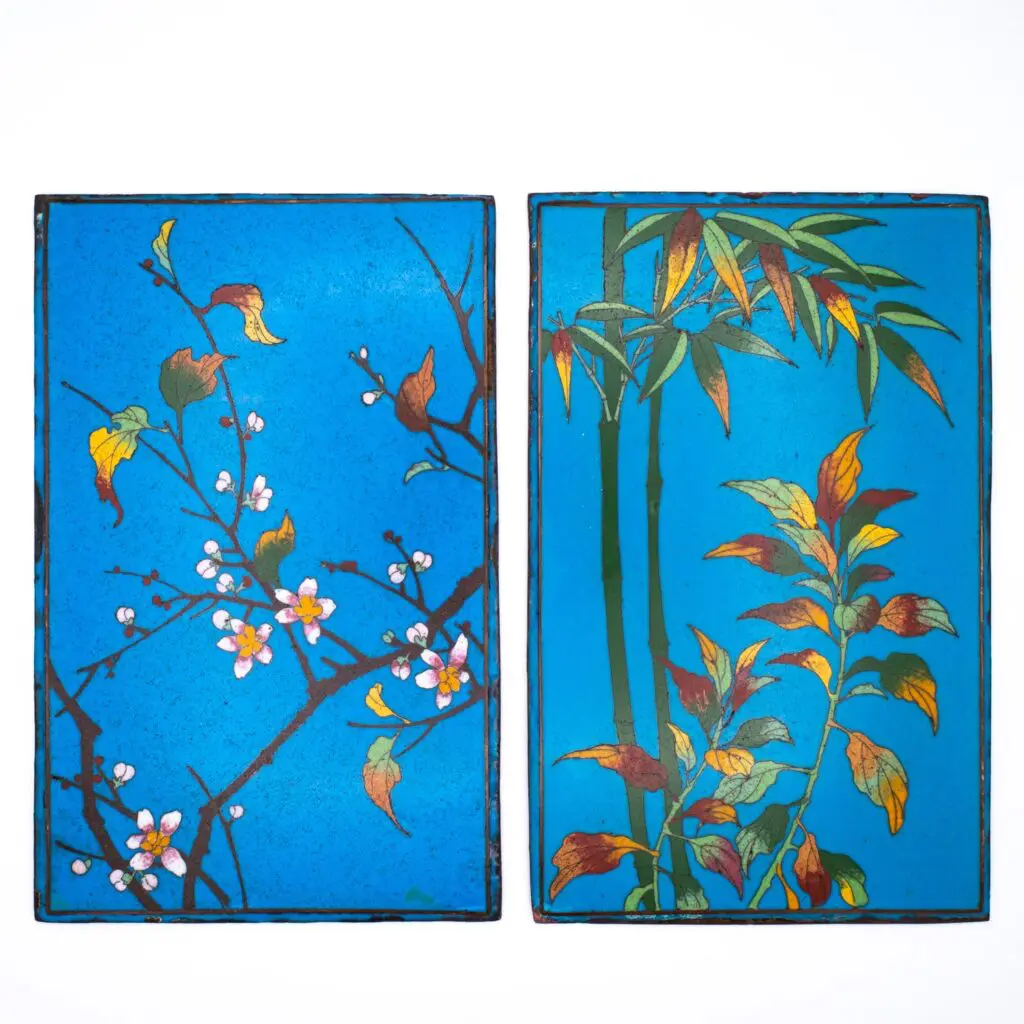
Lovely pair of Japanese rectangular cloisonné plaques featuring blossoming prunus and bamboo, set against a gorgeous blue ground (with slightly different tone on each panel). Originally possibly part of a screen or something similar. Quite rare and stunning decorative objects.
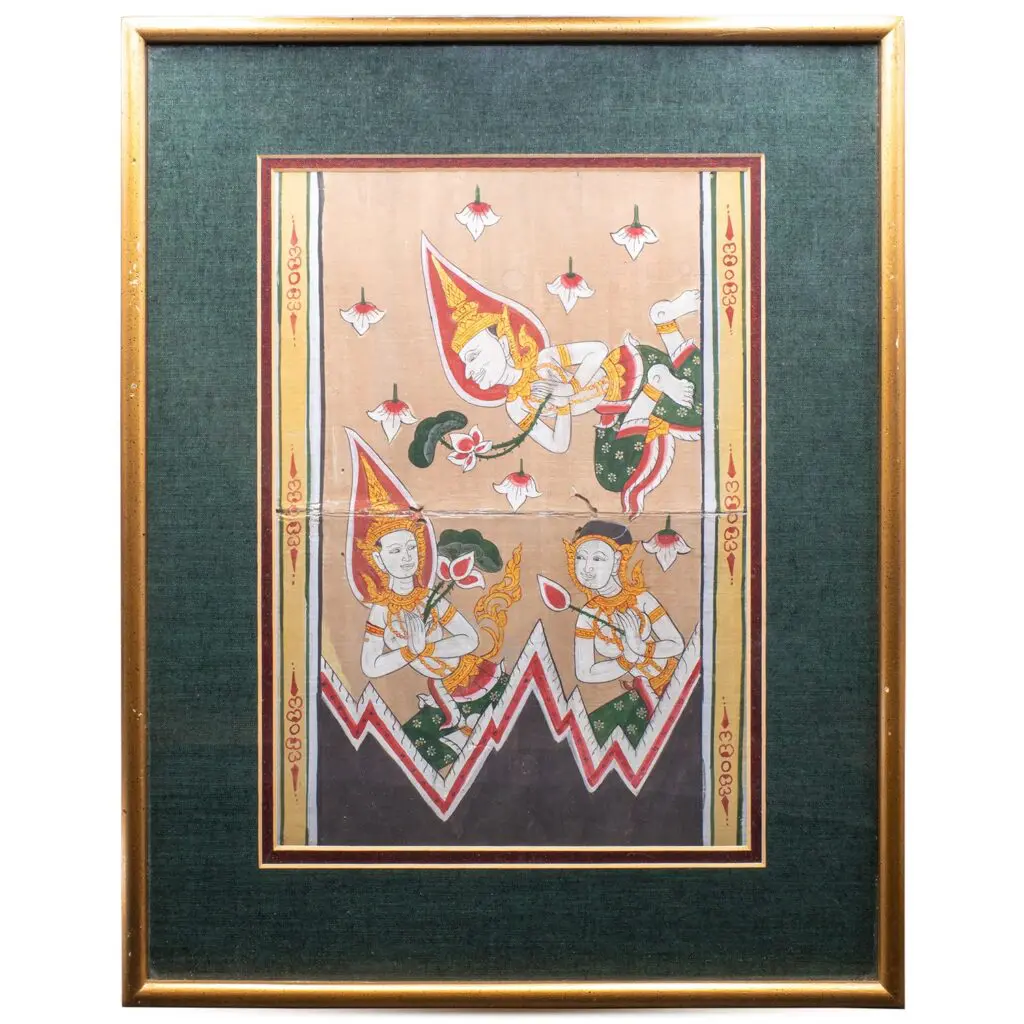
Nice 19th or 20th century Thai gouache painting from traditional illuminated folding Buddhist manuscript (Samut Khoi). Framed by Man Fong, picture frames maker, Hong Kong.
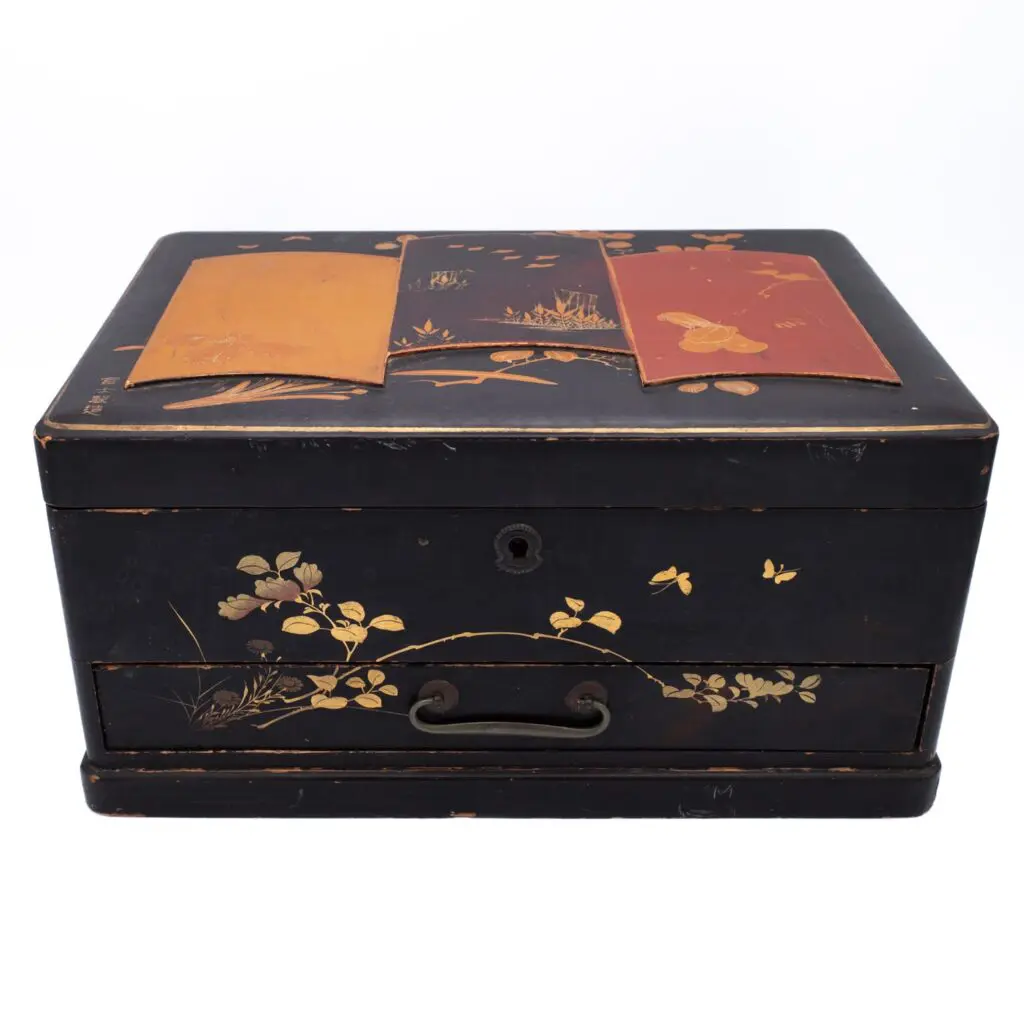
Nice Japanese black lacquered jewellery box with hinged lid, internal compartments and a large drawer. Layer with internal compartments can be removed to reveal additional storage space under. Hinged lid with signature that reads 富士製造.
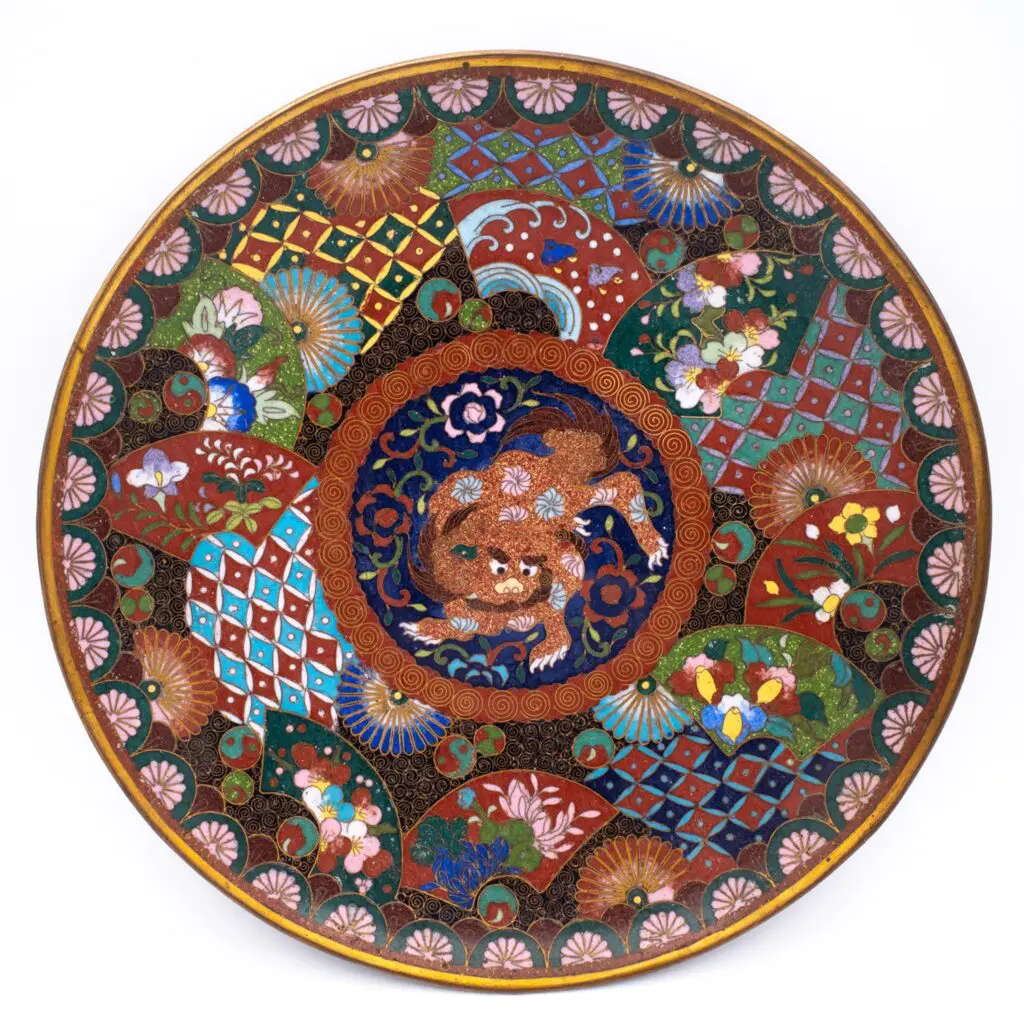
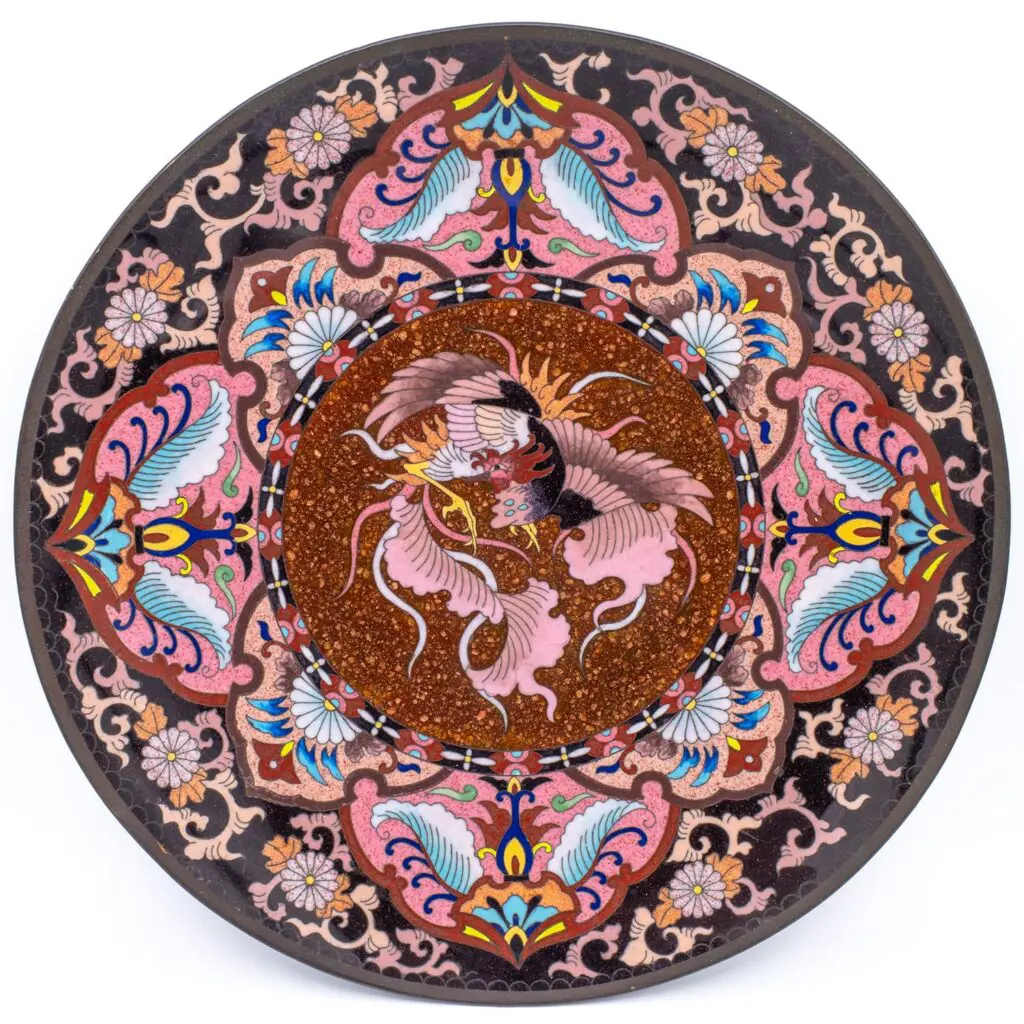
Beautiful large Japanese cloisonné charger decorated with a large central medallion featuring Ho-o bird or Japanese Phoenix against a gold-splashed background. Central scene is framed by a ruyi-shaped geometric patterns and the outer border of the charger is embellished by additional foliate and floral motifs. Reverse enamelled in a typical blue fish scale pattern all over.
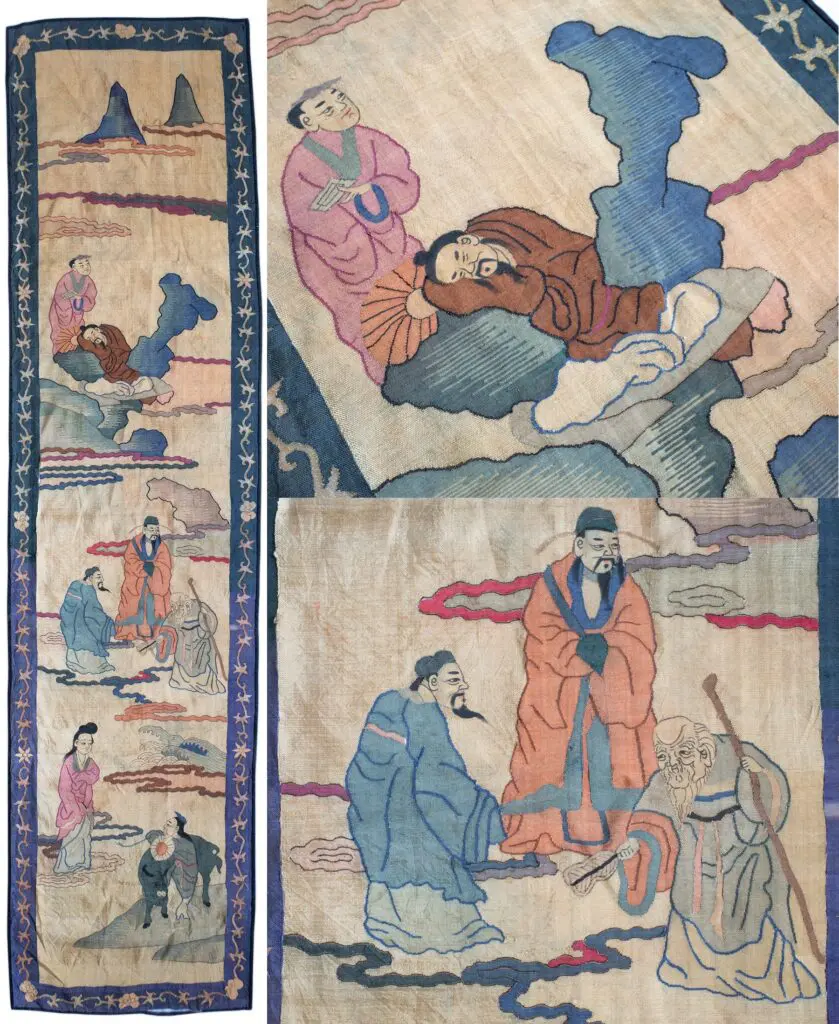
Large antique Chinese kesi silk tapestry textile panel depicting a scene with Daoist Immortals. Gorgeous late Qing dynasty example (for reference see: Sotheby’s Asian Arts / 5000 years sale – 8 November 2022 – Lot 200 – A pair of ‘immortal’ kesi panels, Qing dynasty, 19th century | 清十九世紀 緙絲群仙祝壽圖掛屏一對 ).
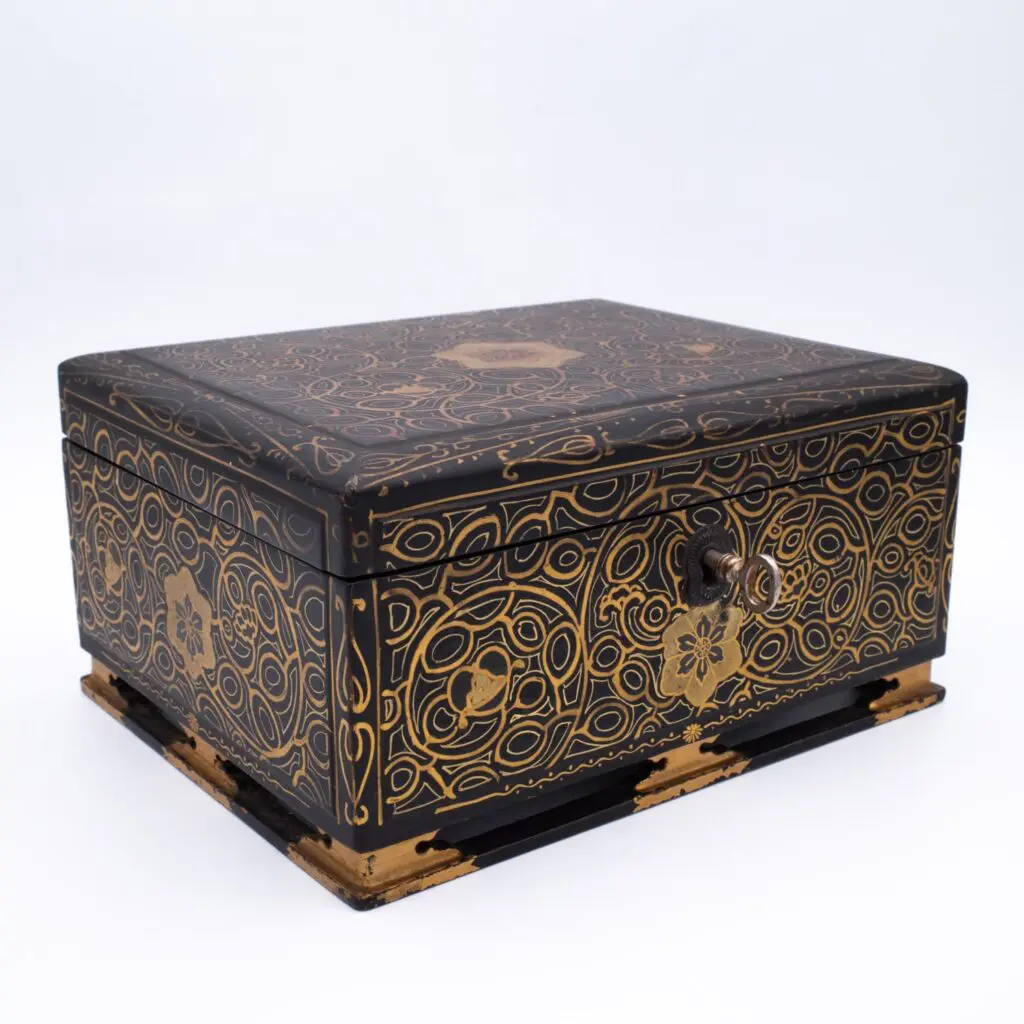
Very pretty Japanese black lacquer box with hinged lid and working lock + key. Decorated all over with heavily gilded foliate and floral patterns. Standing on a raised openwork base.
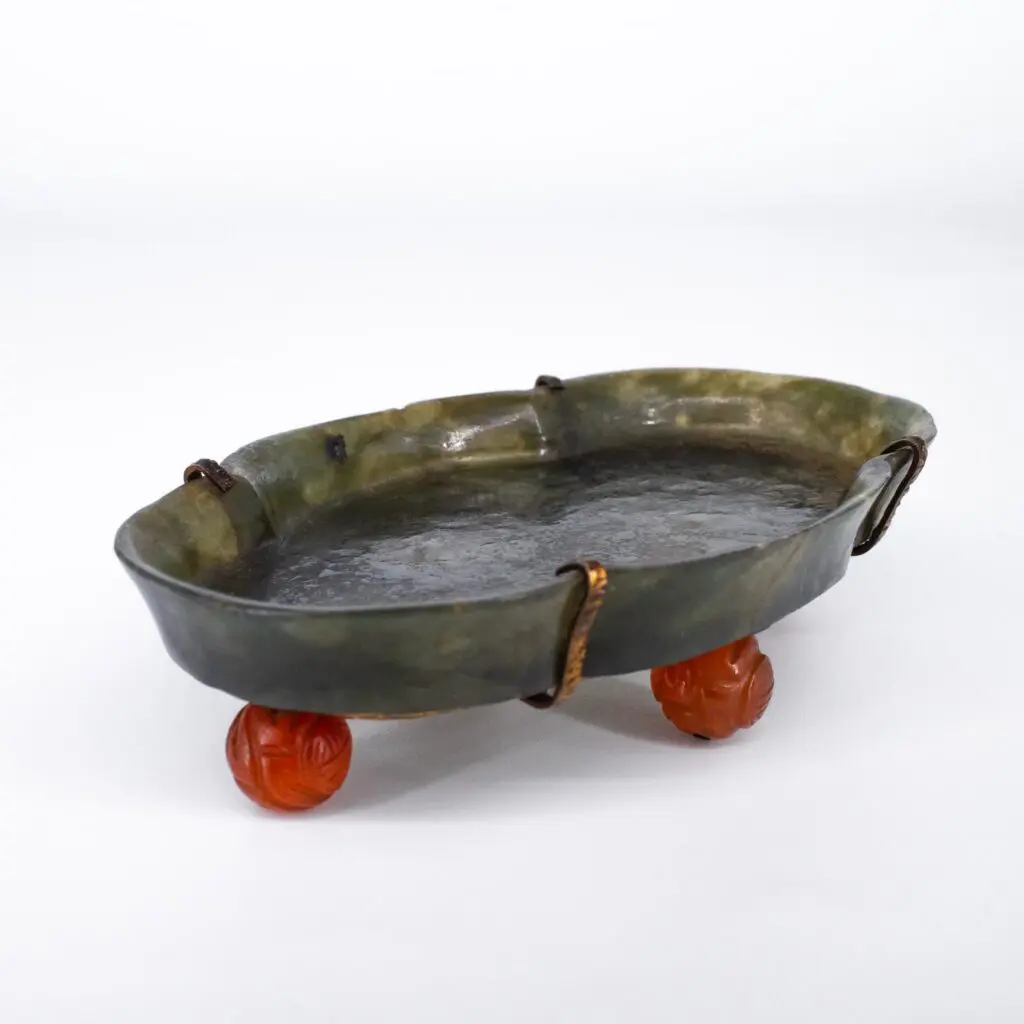
Antique Chinese carved spinach jade brush washer of quatrefoil form, standing on later gilt metal mounted feet made out of agate beads with carved Shou characters. Beautiful and unique Qing dynasty scholar’s object for a collection.
Clobbered porcelain or porcelain with later polychrome overglaze decoration done in Europe is a fascinating sub-category of antique Chinese export porcelain. What started as a simple addition of gilt borders, spouts or handles later evolved into more elaborate patterns such as Dutch decorated ‘Amsterdam bont’ porcelain imitating Imari palette, and even more colourful English pieces – with bright green, yellow or purple enamels – produced in the early 19th century. Reason for over-decorating plain blue and white porcelain with these colourful enamels was to make them more desirable and often also to conceal small imperfections or damage. Opinions of collectors on clobber ware are greatly divided as European decoration is often ‘heavy-handed’ and lacks the elegance of original Chinese patterns. We think that this group should not be overlooked because it is an important part of our material culture and pieces themselves are very often completely unique one-of-a-kind examples, making them highly collectable.
Below is a selection of some of the great pieces of Chinese clobber ware that we’ve handled in the past.
Early 18th century Chinese ‘Amsterdams Bont’ clobbered Kangxi an hua porcelain dish – this type of Chinese porcelain decorated in the Netherlands was a response to great popularity of Imari porcelain during the 18th century. Simple blue and white porcelain could have been bought for low prices, decorated with overglaze enamels similar to those of imari porcelain and then sold for a much higher price. Decoration sometimes featured scenes with European figures and architecture.
Rare early 18th century Chinese Kangxi period export porcelain dish, decorated shortly after in Holland in the manner of Japanese Kakiemon porcelain. Pattern depicts a pair of figures in the garden, listening to a singing nightingale perched on top of a bird cage.
For reference see collection of The Metropolitan Museum of Art,object 1995.268.140
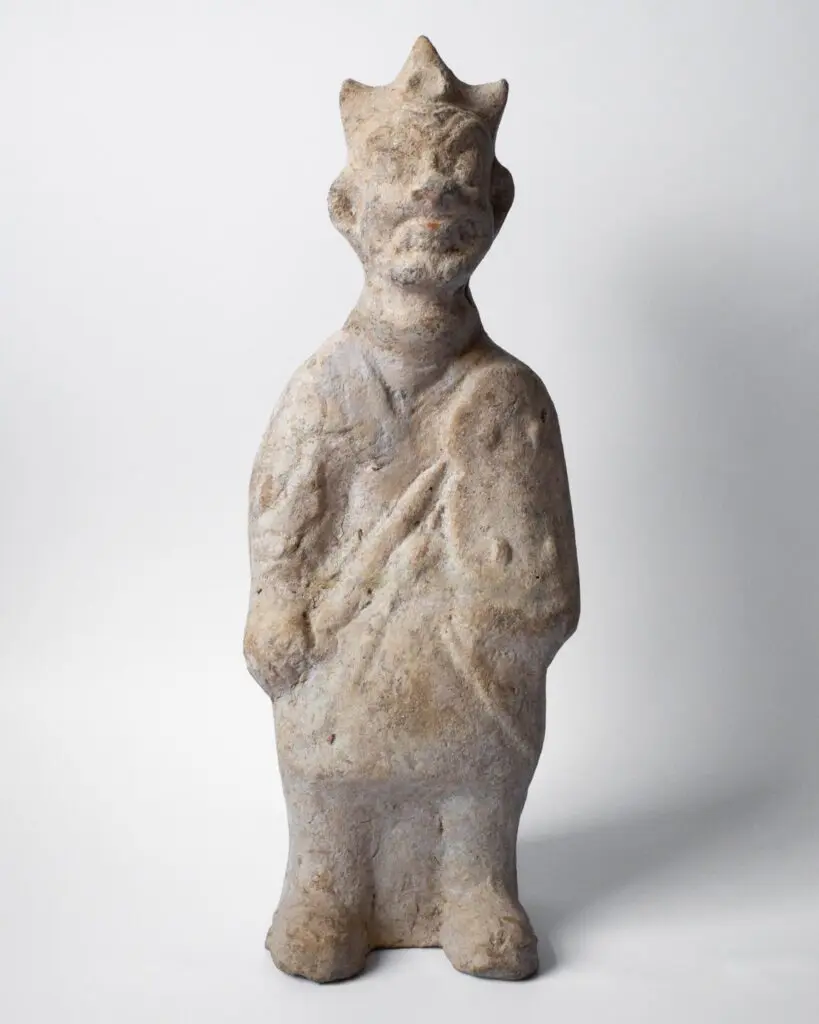
Antique Chinese Clobbered Blanc de Chine Porcelain Dignitary Figure. 17th-18th century. Similar, undecorated example is recorded in the 1688 Burghley House collection inventory.
Antique Chinese clobbered Blanc de Chine Buddhist lion joss stick holder, Kangxi Period (1662-1722) – overglaze decoration was in this case used to conceal damage (missing parts of the joss stick holder and tail of the lion).
Another late 17th or early 18th century Blanc de Chine joss stick holder in the form of a Buddhist lion with a different type of clobbered overglaze decoration.
Clobbered blue and white porcelain dish decorated with typical ‘flower basket’ pattern and marked with underglaze blue double fish mark inside a double circle. 18th century.
Rare antique Chinese square-form blue and white export porcelain bottle with later European polychrome overglaze decoration and ormolu mounts. 18th-19th century.
Antique Chinese clobbered blue and white export porcelain dish with dragons and floral sprays – this type of dragons with white faces is generally thought to indicate pieces decorated in London.
Large clobberware Chinese export porcelain punch bowl decorated with dragons and butterflies, diameter 31 cm – another characteristic of pieces decorated in England is bright lime green enamel used for backgrounds and borders.
Fully clobbered interior of the bowl above
Clobbered Chinese Qianlong period Fitzhugh type export porcelain dish, 18th century – this one is interesting as it features different type of dragons reminiscent of those found of works by Miles and C. J. Mason.
Clobbered 18th century blue and white ‘Long Eliza’ vase with Kangxi conch shell mark – this vase had some damage at the top and was cut down. Clobbering was then used to conceal this alteration and to further embellish it in order to make it more saleable.
Another Kangxi period blue and white porcelain vase with later European overglaze decoration. Painted with moulded lappets enclosing ‘Long Elizas’ and floral jardinieres on stands. Marked with underglaze blue ‘Yu’ mark with later iron red pseudo-Chinese mark painted over it (below).
Many pieces of Chinese porcelain were clobbered in order to conceal small glaze imperfections or damage. Notice prominent fritting on this 18th century export dish.
Unusual Chinese blue and white export porcelain dish with later European polychrome decoration featuring a profusion of floral sprays framed by a simple diaper border.
More examples of 18th century porcelain decorated in England with typical dragons and stippled lime green background.
This one also features panels with bright yellow and stippled blue-green background.
Antique Chinese clobbered blue and white export porcelain dish with chickens. 18th century
This one is even more unique as the original Chinese dish is decorated in overglaze Famille rose enamels rather than usual underglaze blue.
What’s unusual about this example is that it doesn’t seem to have any original Chinese decoration (apart from the turquoise outer border perhaps?).
Clobbered Qing dynasty blue and white porcelain dragon tea bowl with original underglaze blue square shop mark.
Some pieces of clobber ware – such as this 18th century tea bowl – were marked with nonsensical pseudo-Chinese iron red marks. You can find more examples of these on our Chinese porcelain marks identification page HERE.
Another 18th century Chinese clobbered tea bowl, this time with both original underglaze blue maker’s mark and later pseudo-Chinese iron red mark.
Blue and white porcelain saucer decorated with lotus scrolls and with later European polychrome overglaze decoration with a lime green background. Base marked with typical rectangular iron red pseudo-Chinese mark.
Blue and white porcelain saucers featuring central medallions with a bird perched on a rock, surrounded by various flowers all around. Polychrome overglaze decoration added later in Europe. Bases marked with typical rectangular iron red pseudo-Chinese marks.
Fabulous Chinese clobbered blue and white jar featuring colourful mountainous landscape scene with a large bird, flowers, huts and a fisherman. Not marked.
Chinese ‘clobbered’ blue and white jar with later European overglaze decoration featuring colourful dragons, butterflies and flowers painted very much in the manner of C. J. Mason. Not marked.
Clobbered jar featuring a continuous landscape with a dragon, various fish and floral sprays.
Another similar blue and white decorated jar with typical landscape scene with a fisherman and unusual later European ‘clobbered’ decoration featuring flowers, birds, turtle and a crab.
Rare antique Chinese blue and white porcelain pot with later European polychrome overglaze decoration and ormolu mounts. Base marked with typical iron red pseudo-Chinese mark.
We will keep updating this page as we come across additional unique clobbered pieces of Chinese porcelain. Last updated: January 2026
When you click links to various merchants on this site and make a purchase, this can result in this site earning a commission. Affiliate programs and affiliations include, but are not limited to, the eBay Partner Network.
Cookie Settings
We use cookies to improve your experience while you navigate through the website. Click 'Accept' to consent to the use of all the cookies or 'Settings' to adjust your choices.
Functional
Always active
The technical storage or access is strictly necessary for the legitimate purpose of enabling the use of a specific service explicitly requested by the subscriber or user, or for the sole purpose of carrying out the transmission of a communication over an electronic communications network.
Preferences
The technical storage or access is necessary for the legitimate purpose of storing preferences that are not requested by the subscriber or user.
Statistics
The technical storage or access that is used exclusively for statistical purposes.The technical storage or access that is used exclusively for anonymous statistical purposes. Without a subpoena, voluntary compliance on the part of your Internet Service Provider, or additional records from a third party, information stored or retrieved for this purpose alone cannot usually be used to identify you.
Marketing
The technical storage or access is required to create user profiles to send advertising, or to track the user on a website or across several websites for similar marketing purposes.