
カスタマーレビュー
よくある質問
アジアのアンティークをどのように大切にしますか?アンティークがどれだけ価値があるかを知るにはどうすればよいですか?
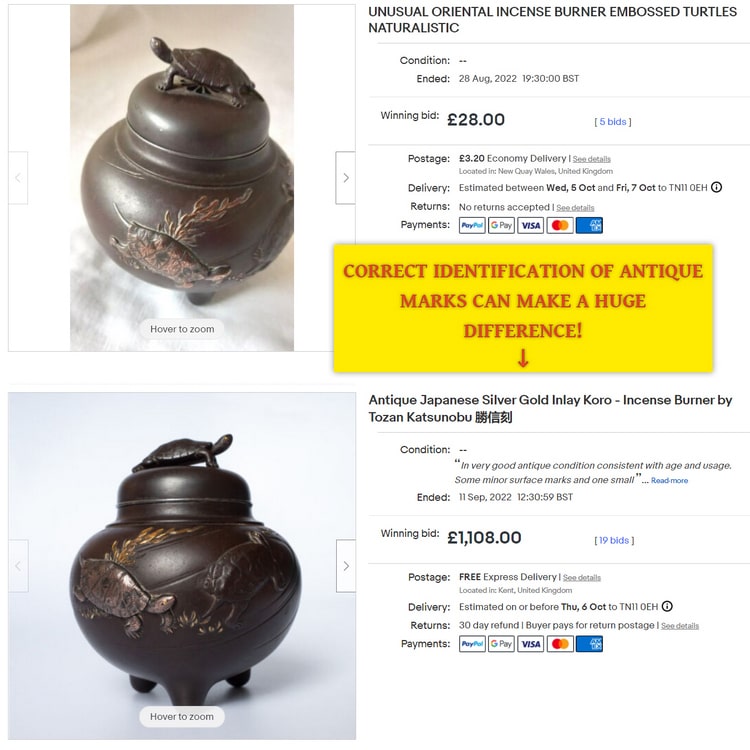
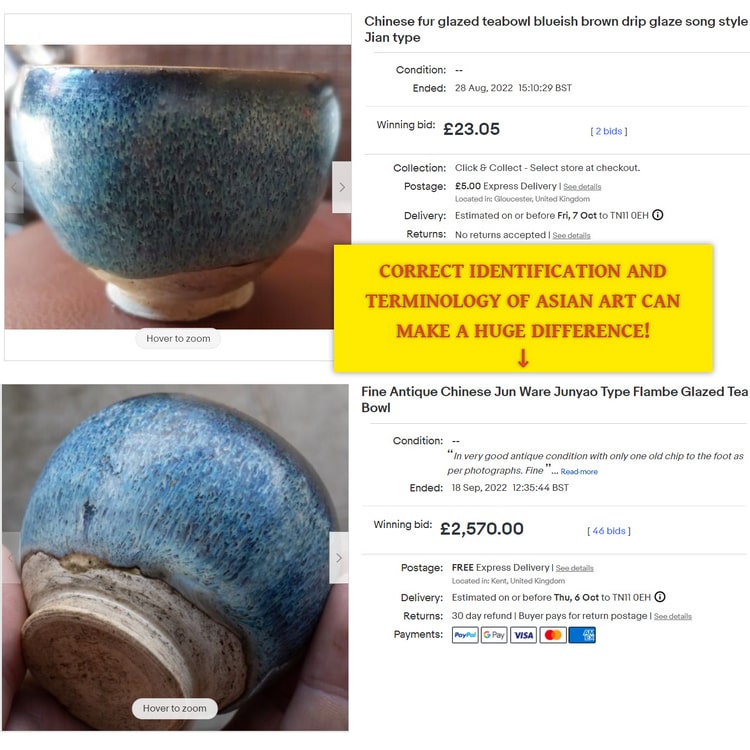
Value of your antique Chinese porcelain will depend on various factors including its age, quality, rarity, condition and any maker’s marks or reign marks that it has either in underglaze blue or other overglaze enamels. For example, your item can be hundreds of years old but it won’t have much value if it’s a commonly found and simply made provincial piece intended for everyday use. It can be marked with the reign mark of a particular Chinese emperor but as we all know, these were copied over and over during later periods – sometimes as a sign of respect and other times simply to deceive potential customers. Or it can be quite rare but if the condition is not good, its value will be affected significantly. Some completely unassuming pieces can be worth thousands and thousands of pounds while other impressive and ‘flashy’ pieces can be almost worthless. If you are not 100% certain about the origin and value of your item, please get in touch and find out whether your antique Chinese (or Japanese) porcelain is valuable or not. It’s definitely worth it for your own peace of mind as people are giving away very expensive pieces – without even knowing it – on a daily basis.
私のアンティークの磁器に漢字マークの意味を教えてもらえますか?
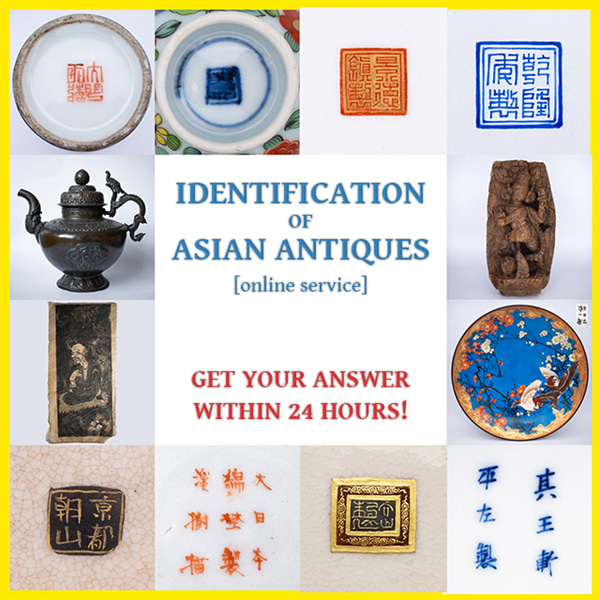
Yes. We can translate your porcelain mark for you and also provide you with its original form in Chinese or Japanese character marks. We will also give you additional information including its approximate age and whether it is of the period or a later ‘apocryphal’ mark. We can help with all kinds of Chinese and Japanese marks including underglaze blue marks inside double circles, four-character and six-character reign marks, symbol marks, incised or relief moulded marks as well as a variety of marks on non-ceramic objects such as antique carvings, paintings, bronzes or cloisonné enamel pieces. Our service also includes identification of Japanese porcelain and ceramic marks such as those found on Arita porcelain, Satsuma pottery, Kutani porcelain and other antique or modern Japanese ceramics.
マークなしで中国の磁器を識別することができますか?
Yes. Identification of porcelain without any markings can sometimes prove tricky but in the vast majority of cases it is possible to pinpoint the origin and approximate age of an antique ceramic object purely based on its form, materials, types of enamels and style of the decoration. You can be sure that our service will shed some light on the origin, age and value of your item. Satisfaction guaranteed – or your money back!
中国の磁器が本物のアンティークなのか、それとも単なる現代の複製なのかをどのように判断できますか?
It can often be quite difficult to tell whether a piece of Chinese porcelain is genuine or reproduction. If you send us photos of your item, we will almost certainly be able to tell you whether it’s genuine or whether it’s showing any unusual features that might indicate later reproduction. Some of the most common red flags of modern Chinese reproductions to look out for are:
• lack of wear or damage – you will often see Ming dynasty style (or even older) vases and dishes in pristine condition without any breaks, repairs or a single scratch in the glaze;
• style and quality of decoration – reproductions often lack quality but even if they are finely decorated, there will always be subtle stylistic details that can reveal their true nature if you know what to look for;
• presence of polychrome enamels that are not consistent with the period – some reproductions of Famille rose porcelain feature certain colours that simply did not exist in the early years of the Qing dynasty. Later 20th century pieces also feature transfer-printed black outlines that are later coloured in by hand.
• copies of very well-known and extremely rare pieces – Chinese often copy high-profile imperial pieces sold at Christie’s, Bonhams or Sotheby’s.
ヴィンテージやアンティークのアジアのオブジェクトについて質問がある場合、またはオークションで何かがよくわからない場合はご連絡ください。私たちはあなたをとても喜んで助けてくれます。