Dating antique Chinese cloisonné can often be a challenging task, as it is not always easy to determine the age of a piece based on its appearance alone. However, there are a few key characteristics that can help narrow down the age of a cloisonné piece. One of the most important factors in dating antique Chinese cloisonné is the style. Cloisonné from the Ming Dynasty (1368-1644) tends to have a more formal, classical style, while cloisonné from the Qing Dynasty (1644-1912) is often more decorative and ornate.
Enamels of the Ming Dynasty tend to have a softer, more muted colour palette, while the development of famille rose enamels in the Qing Dynasty enabled a much wider range of colours with a more vibrant appearance.
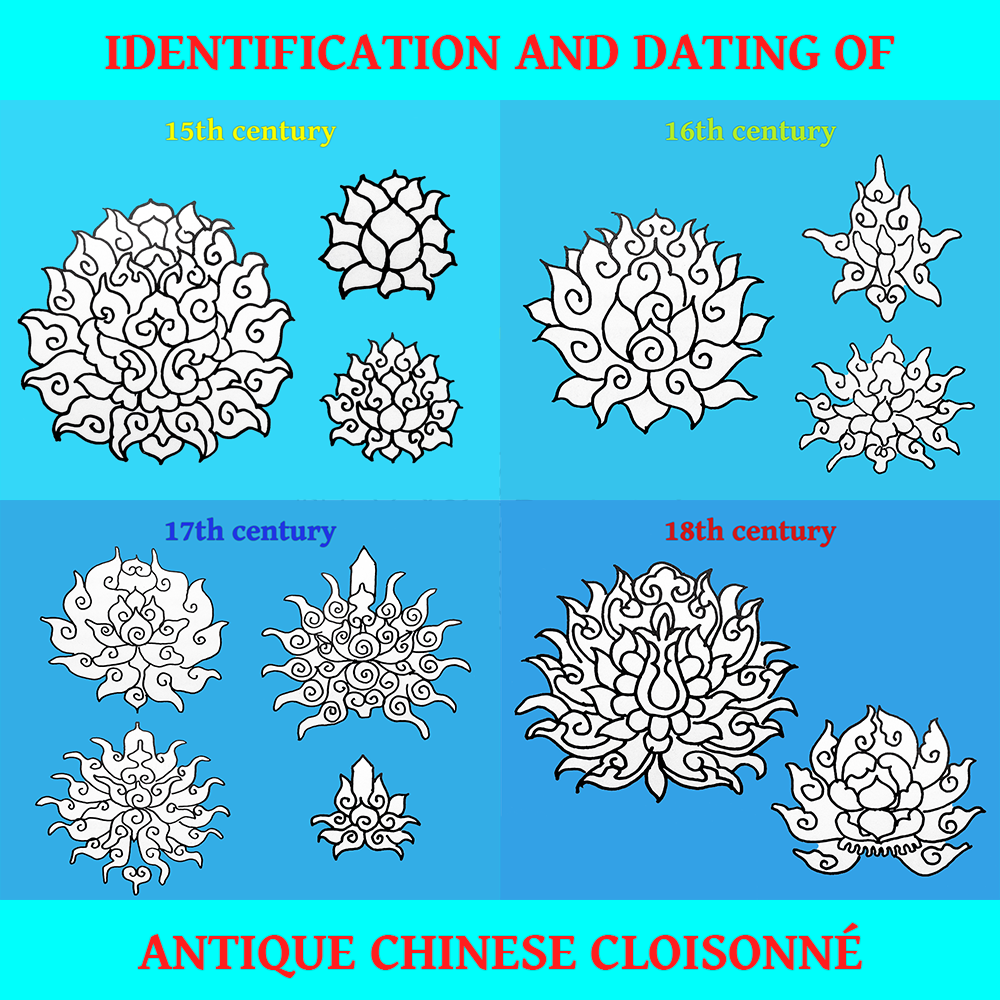
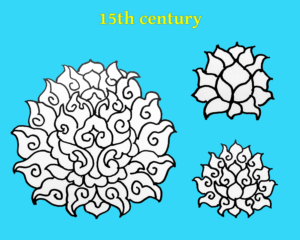
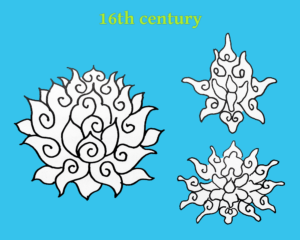
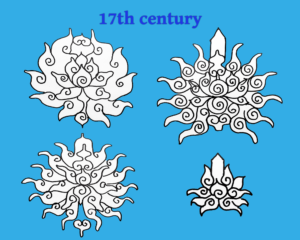
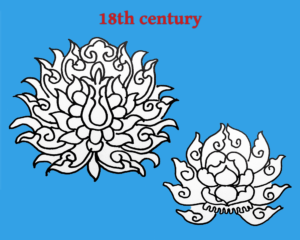
Examples below give a simple overview of typical lotus or ‘Bao Xiang Hua’ floral decoration found on cloisonné of the Ming and Qing dynasties between 15th and 18th century. This motif was inspired by earlier 14th century blue and white porcelain and remains popular to this day. Please note that images below show only general trends over the centuries. There was variability between different workshops and these motifs were also often copied on later 19th and 20th century cloisonné. Always consider other factors mentioned on this page to make sure that all aspects of your object are consistent with proposed period of manufacture.
Need more help?
If you need further assistance with identification of Chinese cloisonné, please contact us.
Types of lotus motifs found on early 15th century Chinese cloisonné. Shapes are clearly influenced by the same motifs found on blue and white porcelain of the period.
Even though the popularity of the lotus as a motif on porcelain declined during the 16th century, it still remained popular on cloisonné and its general shape became more standardized during this period.
First example dating to the turn of the century (top left) is still very similar to 16th century examples above but as we move through the 17th century, we notice that protrusions become more pronounced, making the flower look somewhat ‘skinnier’.
Examples of ‘Bao Xiang Hua’ from 18th century Qing cloisonné, clearly showing composite nature of this symbol that is not a simple lotus flower anymore but has additional floral features not seen in nature. Style of cloisonné decoration becomes much more diverse in the 18th century and later during the Qing Dynasty, mainly due to the development of famille rose enamels that brought additional colours, shades and thus also more artistic freedom.
Other factors that can help in dating antique Chinese cloisonné include the design and subject matter of the piece, as well as any marks or inscriptions that may be present. It also helps to compare designs with lacquerware and porcelain of the period as they often share very similar decorative motifs. It is important to note that it is often difficult to accurately date antique Chinese cloisonné based on these factors alone, as there is often overlap between different styles and periods. In order to accurately date a piece of cloisonné, it is necessary to consult with a specialist or refer to reference materials such as books or online resources.
Examples of 19th-20th Century Chinese Cloisonné Enamelware From Our Collection
Antique 19th century Chinese blue ground cloisonné vase with floral decoration.
Antique Chinese cloisonné enamelled dragon vase by Lao Tian Li. Base marked with incised square mark 老天利製 ‘Made by Lao Tian Li’. Early 20th century.
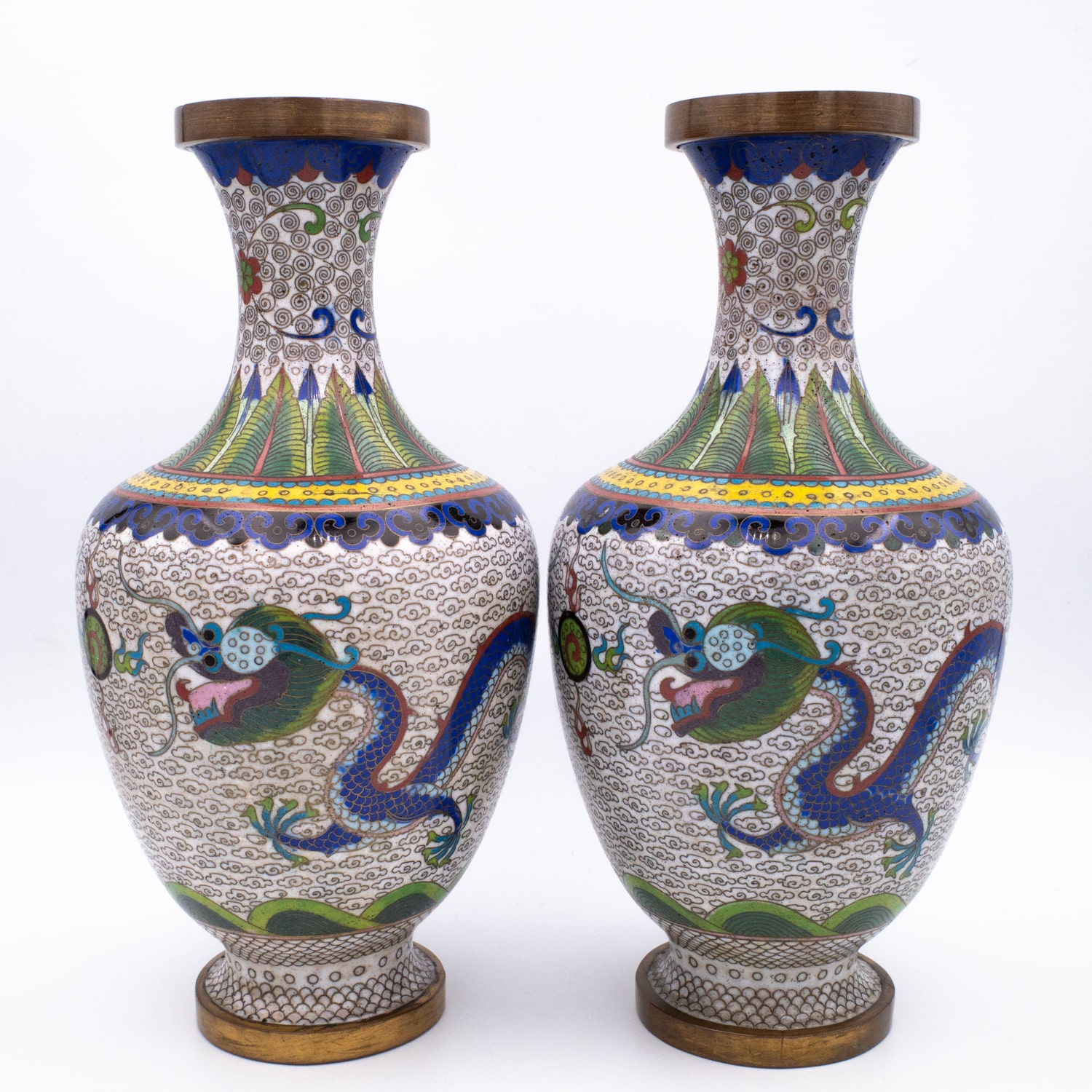
Attractive pair of Chinese cloisonné enamelled vases depicting dragons amongst clouds chasing after the flaming pearl. c. first half of the 20th century.
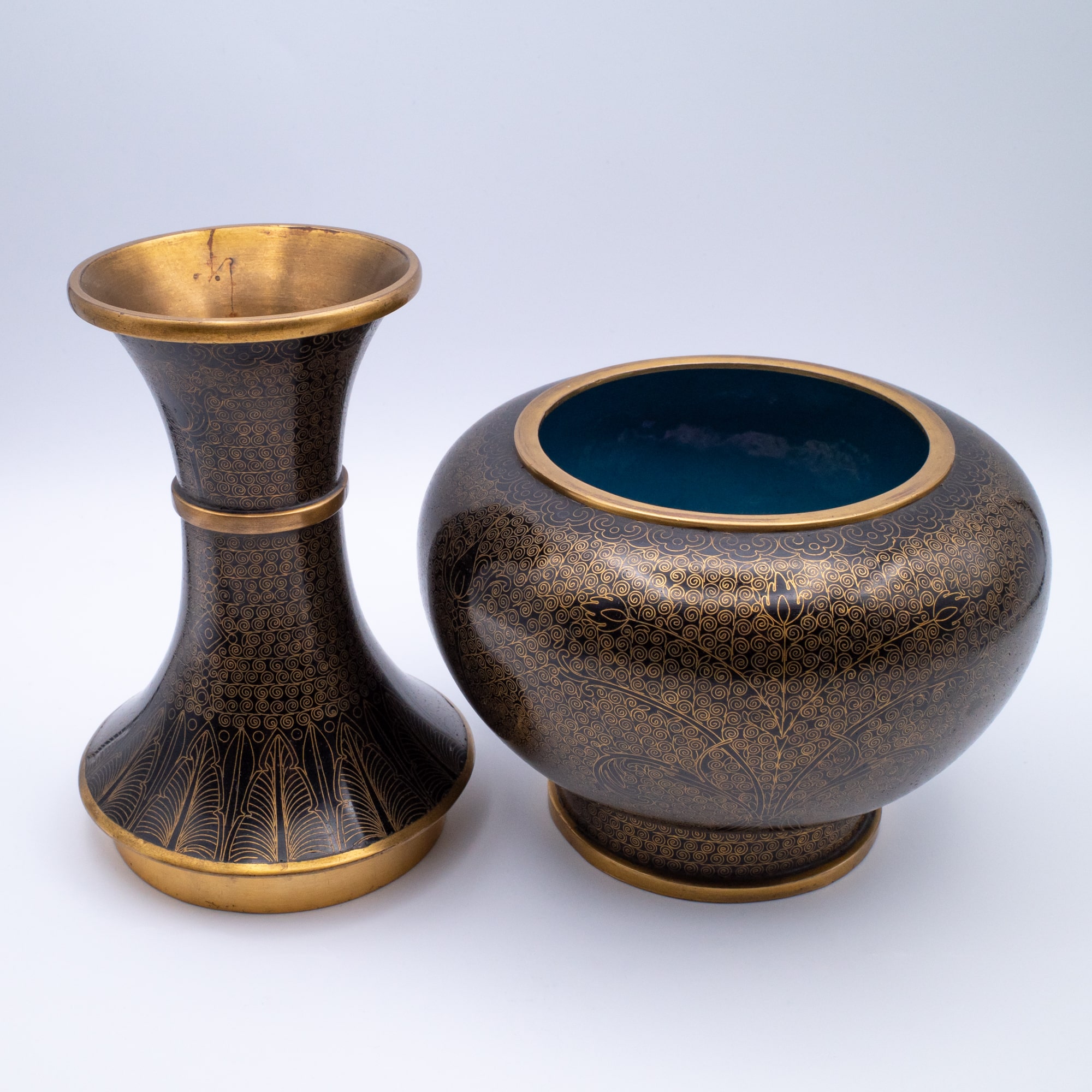
Interesting Chinese monochrome cloisonné vase that can be separated in the middle to create two separate vessels (top section is sealed at the bottom). 20th century.
A later 20th century large black Chinese cloisonné bowl decorated with geometric patterns interspersed with Bao Xiang Hua floral sprays. Apocryphal four-Qianlong character reign mark to the base.
Gorgeous Chinese cloisonné enamelled pedestal bowl depicting Buddhist Ashtamangala or Eight Auspicious Signs. 20th century
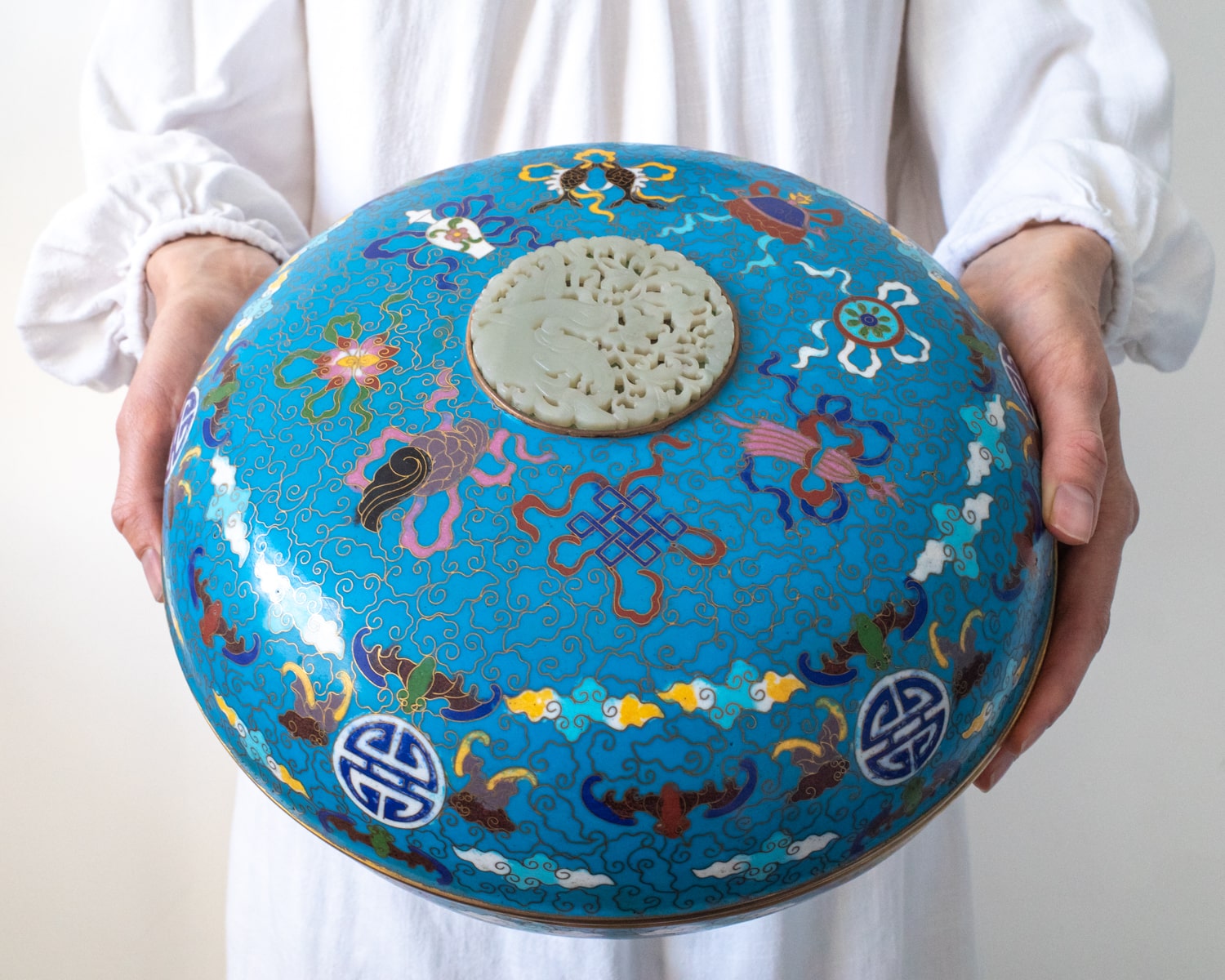
Large Chinese covered cloisonné bowl decorated with auspicious symbols including eight Buddhist precious objects (Ashtamangala), Shou characters and bats on a blue ground with clouds. Later 20th century
Fine pair of vintage Chinese cloisonne enamelled vases with stunning decoration featuring butterflies, foliate scrolls and various geometric designs. Good quality pieces dating to the second half of the 20th century.
Further reading: Brinker Helmut Susanna Swoboda and Albert Lutz. 1989. Chinese Cloisonné : The Pierre Uldry Collection. New York: Asia Society Galleries.
Need more help?
If you need further assistance with identification of Chinese cloisonné, please contact us.
New in our eBay shop
Clicking a link to eBay may result in a referral commission being paid if a purchase is made.
We use cookies to improve your experience while you navigate through the website. Click 'Accept' to consent to the use of all the cookies or 'Settings' to adjust your choices.
Functional
Always active
The technical storage or access is strictly necessary for the legitimate purpose of enabling the use of a specific service explicitly requested by the subscriber or user, or for the sole purpose of carrying out the transmission of a communication over an electronic communications network.
Preferences
The technical storage or access is necessary for the legitimate purpose of storing preferences that are not requested by the subscriber or user.
Statistics
The technical storage or access that is used exclusively for statistical purposes.The technical storage or access that is used exclusively for anonymous statistical purposes. Without a subpoena, voluntary compliance on the part of your Internet Service Provider, or additional records from a third party, information stored or retrieved for this purpose alone cannot usually be used to identify you.
Marketing
The technical storage or access is required to create user profiles to send advertising, or to track the user on a website or across several websites for similar marketing purposes.